



Serbia faces a major democratic transition after the victory of students in the snap parliamentary elections and the defeat of populist leader Aleksandar Vučić, the Parisian daily Le Monde assessed today.
After the defeat of the coalition led by the former president, who had been in power for 14 years, Serbia is expected to undergo a major democratic transition, which could encourage a new dynamic of reconciliation in the Balkans, the French newspaper noted.
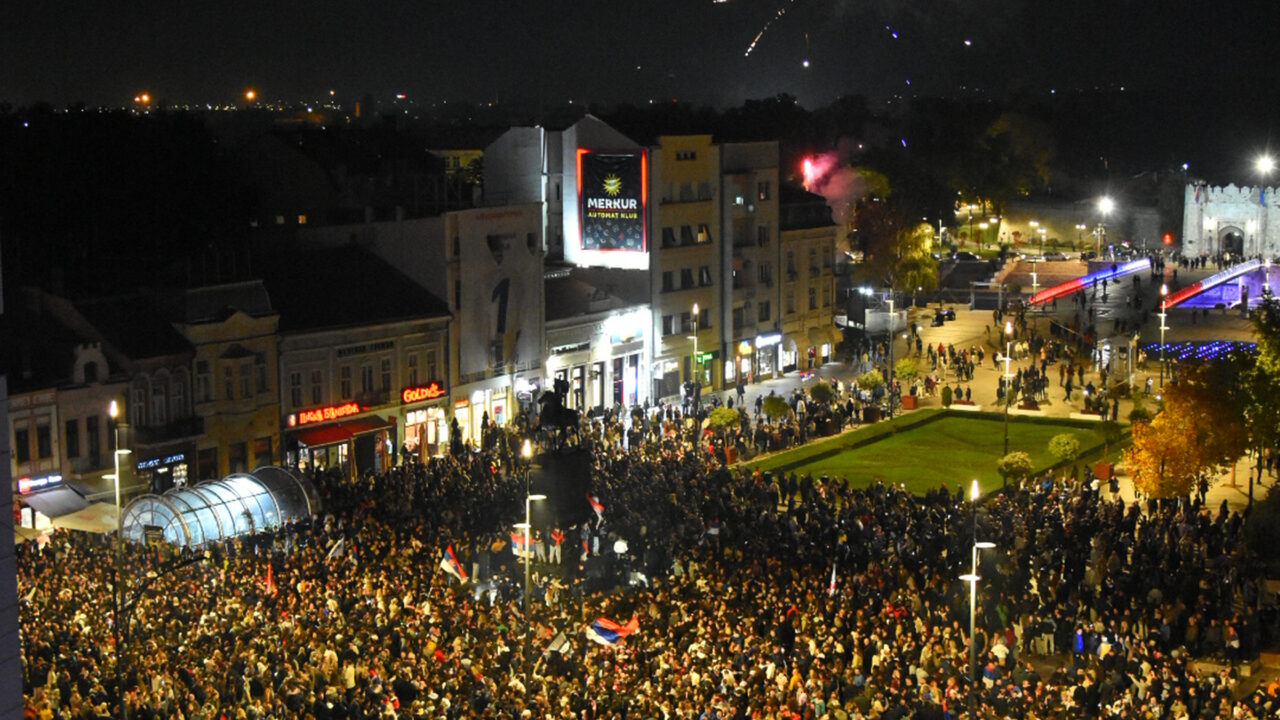
Several hundred thousand Serbian citizens took to the streets last night to celebrate the convincing victory of the opposition in the parliamentary elections — an outcome that marks a historic political change for this Balkan nation of 6.5 million people.
In an unexpected turn of events on election night, Vučić, the former president of Serbia and leader of the “United Serbia” coalition, conceded defeat to the Students’ List at 9:30 p.m., just an hour and a half after the polls closed.
“This is the consolidation of the revolution that (the students) carried out with the direct support of various European countries and the American ‘deep state’—the faction opposed to American President (Donald) Trump,” Vučić stated bitterly, according to Le Monde.
As a self-declared admirer of Hungarian Prime Minister Viktor Orbán, the Serbian leader has now himself suffered an electoral defeat, six months after his ally also lost, in the face of a pro-European sentiment led by students.
Le Monde reports that none of the major, long-standing parties in the country managed to surpass the three percent threshold required to enter this unicameral parliament, with the exception of four lists representing minority groups.
The Parisian daily adds that even the Socialist Party of Serbia, founded by former president Slobodan Milošević, appears for the first time in 36 years to be left without seats in parliament.




Your perspective is part of the story
Read other perspectives and join the conversation.