



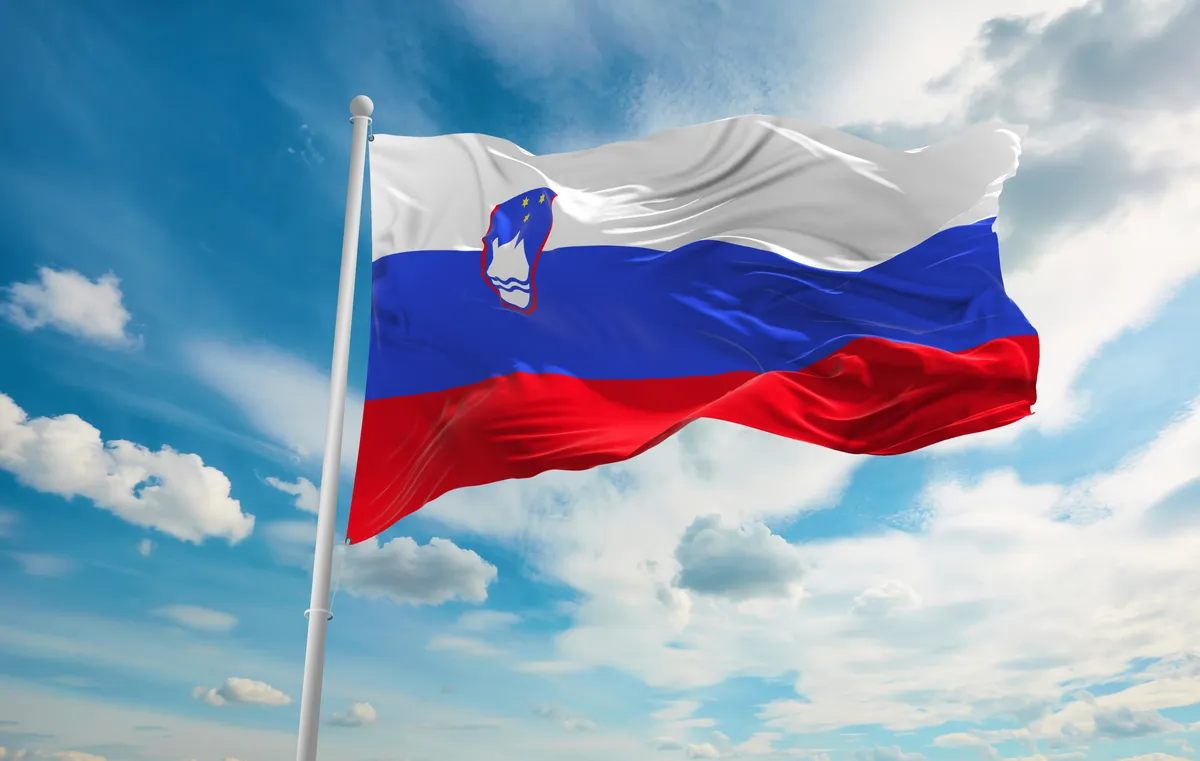
Today, Slovenia marks Sovereignty Day, in remembrance of the departure of the last soldier of the Yugoslav People’s Army (JNA) from its territory at the end of October 1991.
The central celebration of Sovereignty Day was held in Koper, without the presence of Slovenian President Nataša Pirc Musar, as well as all former presidents of the country, including the first head of state, Milan Kučan.
Pirc Musar cited as her reason for not attending the exclusion of the flag of the Association of Veterans for the Values of the National Liberation Struggle (NOB) and the labeling of the 35th anniversary of independence as the “liberation of Slovenia” in the official invitation.
On the other hand, the only speaker was Slovenian Prime Minister Janez Janša, who identified the five-pointed star as a symbol of aggression against Slovenia.
“The ship carrying the last group of the defeated Yugoslav army left Slovenian territorial waters a few minutes after midnight, on October 26, 1991. And when the first autumn rays appeared in the morning and illuminated the old city center, Slovenia was already free and sovereign… With a military victory over what was then one of the strongest powers in Europe, we opened the door to international recognition,” said Janša, leader of the right-wing Slovenian Democratic Party, whose speech was met with loud whistles.
Janša cited as the key reason for victory in the war against Yugoslavia the clear political goal and unity of the people demonstrated in the plebiscite in December 1990.
“Secondly, we did not underestimate the opponent, but they did underestimate us. Thirdly, our units were homogeneous and motivated, while the opponent’s mostly were not. Fourthly, we carried out most of the urgent and possible preparations for defense on time. Fifthly, we had good information about the opponent. Sixthly, we neutralized the opponent’s superiority in weapons and numbers by limiting their maneuvering space. Seventhly, we approached the conflict with the aim of avoiding casualties on both sides,” said Janša, who was Minister of Defense during Slovenia’s struggle for independence.
The last JNA soldier left the Port of Koper on the night between October 25 and 26, 1991. The JNA attacked Slovenia the day after the declaration of independence on June 26, 1991. The war lasted 10 days and ended with negotiations in Brioni.


Your perspective is part of the story
Start the discussion and be the first to comment on this story.