



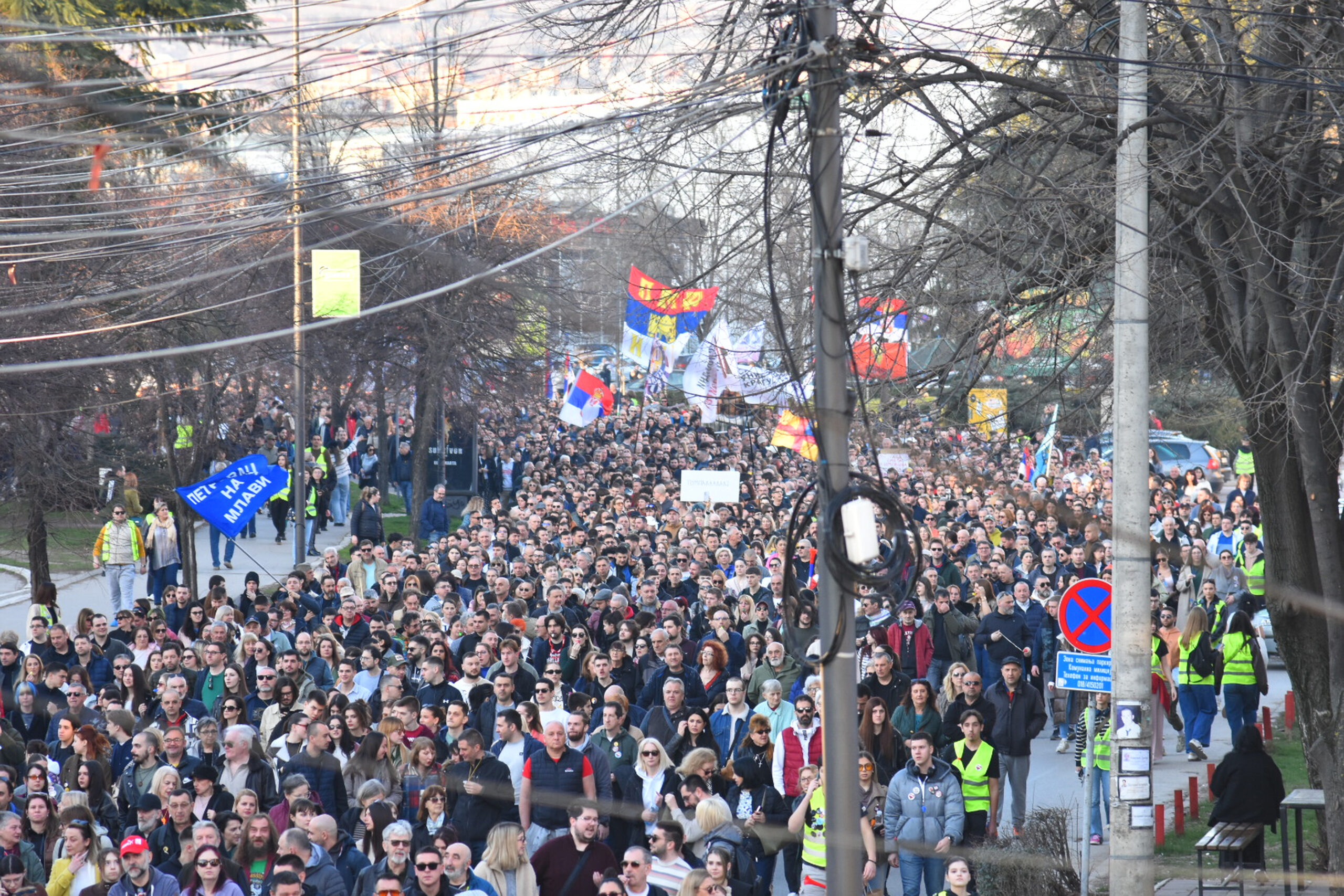
In Serbia, there are many people who do not want to accept the truth about the wars in the former Yugoslavia, and there are also those, mostly young people, who simply do not know it, since the government of President Aleksandar Vučić has instrumentalized Serbian history and there is no critical re-examination of the 1990s in schools, writes the Neue Zürcher Zeitung (NZZ) today.
The Swiss daily writes that at the funeral of Ratko Mladić there were many people who were not even born at the time of the war in Bosnia and Herzegovina.
Young lawyer and opposition activist Milan Vujić says that the wars in Bosnia and Croatia are officially part of the curriculum, but “they are only covered at the end of the school year, when teachers simply no longer have time to deal with these topics.” “In class, we never seriously discussed Srebrenica, Sarajevo, Vukovar, Kosovo, war crimes, or Serbia’s role in those wars,” says Vujić.
NZZ writes that many history teachers simply omit these topics, and according to Vujić, most of his generation therefore “accept the narratives of the Serbian media” and live in a “bubble of false stories.”
Vujić says that in his youth he himself idolized Ratko Mladić, but then he did his own research and changed his view, “but not with the help of Serbian history books.”
“In them, in fact, there is not a single mention of the responsibility of Serbian armed forces for crimes,” writes NZZ.
Historian Jelena Đureinović from the University of Vienna has examined the content of these books in detail and says that the Serbian “Ministry of Education strictly controls the content, including that of private publishers, and censors everything that contradicts the politics of remembrance.”
“The breakup of Yugoslavia is discussed without the broader context of the Cold War and the collapse of communism. All blame is assigned to Croats, Kosovo Albanians, and Bosniaks,” writes NZZ.
“Particularly cynical is the description of the siege of Sarajevo in one book. It says that many Serbs remained trapped because the Muslim army did not allow them to leave the area,” writes NZZ, adding that the truth is that the Serbian army under the command of Ratko Mladić besieged the city for four years, shelled it daily, and that 11,500 people were killed, including about 1,600 children.
“That passage is probably the most blatant distortion of facts and shift of perspective—away from Serbian criminals and their victims, and toward Serbian victims,” says Đureinović.
She adds that from textbooks, when it comes to crimes against non-Serb populations, it is learned that they occurred, “but not by whom, and against whom.” When it comes to ethnic cleansing, only the persecution of Serbs is mentioned, even though in Bosnia about 80 percent of civilian victims were Bosniaks. This, according to her, speaks to an “obsession with the victim myth.”
“According to several studies, the young generation in Serbia holds the incorrect belief that Serbs were the greatest victims of the wars of the 1990s,” writes NZZ.
Furthermore, in one of the textbooks, the neighboring countries of Bosnia and Herzegovina and Montenegro are listed as Serbian lands.
“In Serbian public discourse, the narrative prevails that Serbia as a state did not participate in the war in Bosnia. Blame is assigned to paramilitary formations, Serbs outside Serbia, and the international community,” writes NZZ.
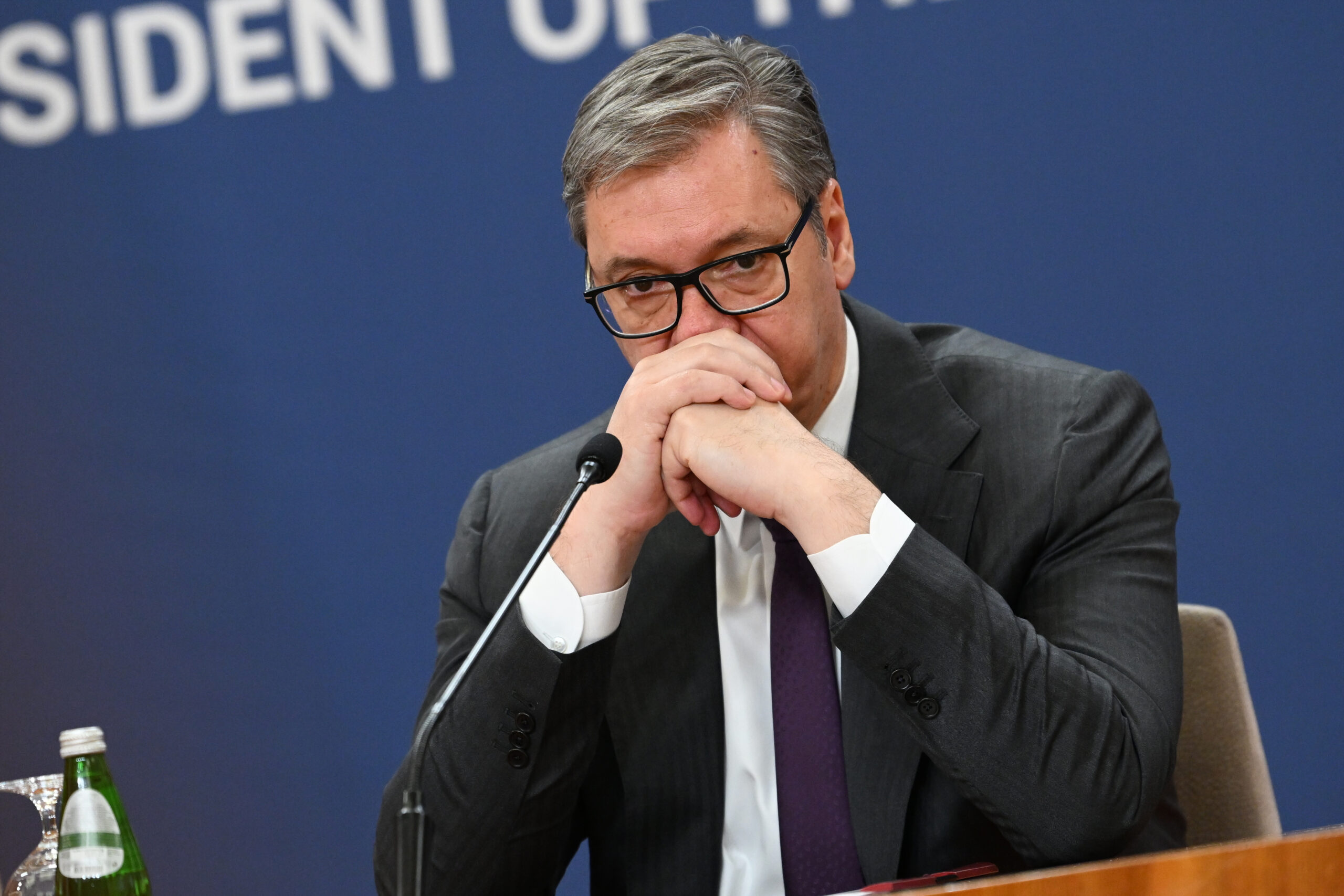
The paper writes that the government in Belgrade, led by Aleksandar Vučić, is trying to instrumentalize these wars for its own benefit. “It presents itself as a liberator, who will teach true Serbian history and restore the nation’s pride, after allegedly being forced for decades to be ashamed of its ‘heroes’,” writes NZZ.
“The entire public life is poisoned by this extremely right-wing discourse. That is why students can hardly hear anything else,” notes NZZ.
Đureinović believes that textbooks and teachers who support critical thinking and are willing to truly discuss the 1990s would mean a major change in Serbian society, “but that at this moment it is illusory,” writes NZZ.


Your perspective is part of the story
Start the discussion and be the first to comment on this story.