



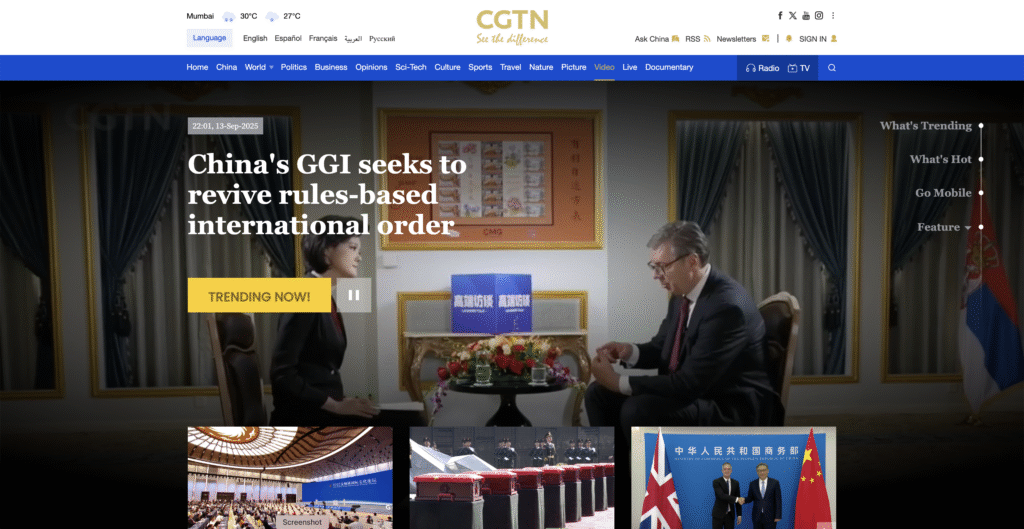
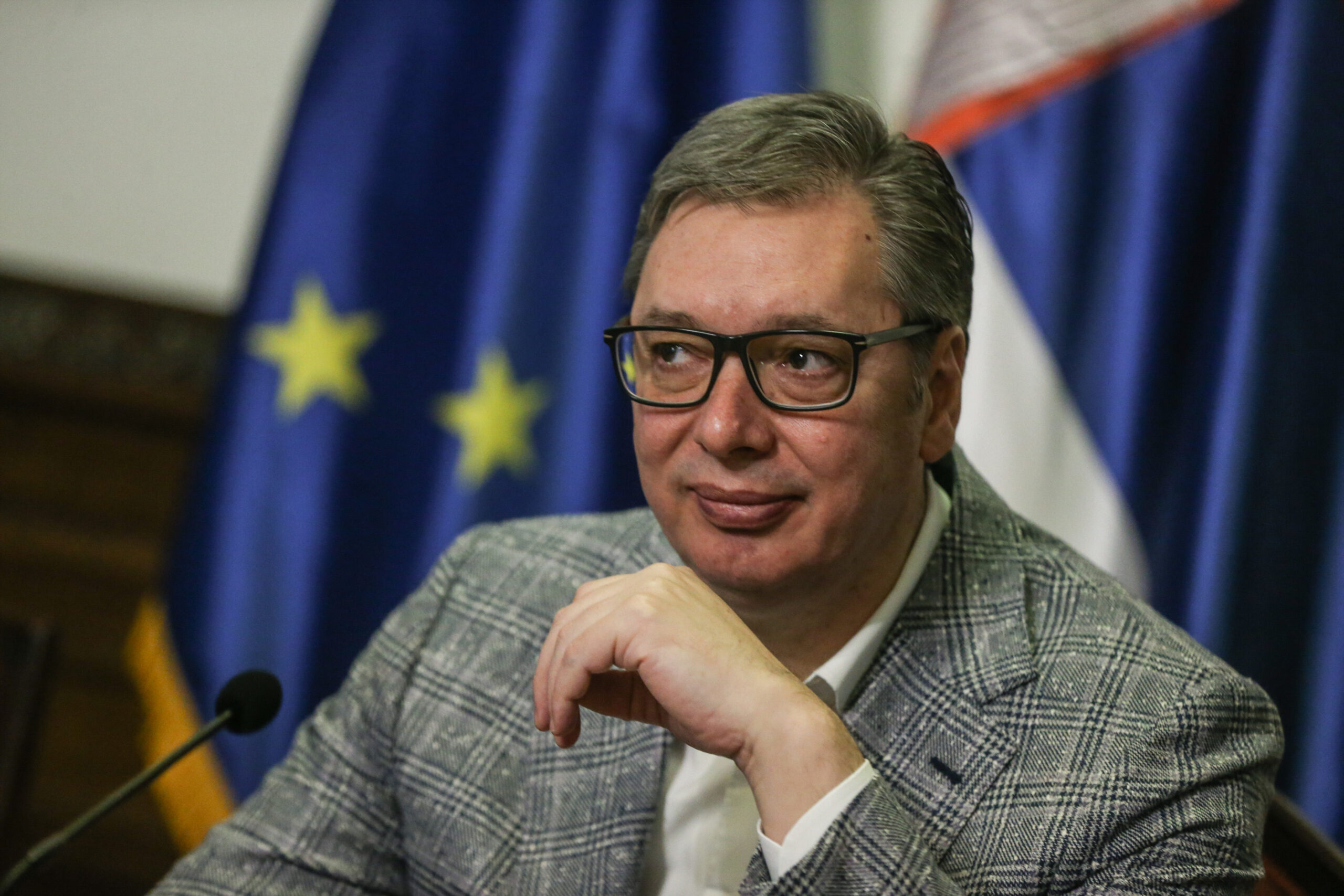
In an exclusive interview with CGTN, Aleksandar Vučić presents Beijing as the main anchor of Serbia’s foreign policy: from the security spectacle on Tiananmen and “ironclad friendship” to open loyalty to the One-China principle. Europe, by contrast, is pushed into the distance — “not before 2030, maybe even later” — while the Smederevo steel mill is offered as economic proof that the course is right. In the same breath, the president repeats neutrality and opposition to sanctions, but without a clear doctrine for how Serbia produces its own security; a narrative of historical “truth” and a personalized relationship with Xi Jinping takes the place of strategy.
How the narrative is built — from ceremony to doctrine
The CGTN interview with Serbia’s president isn’t mere protocol; it’s a carefully composed political text in which the emotional experience of a grand ceremony in Beijing intertwines with theses about the global order, historical “truth,” and the usefulness of “ironclad friendship” with China. On the surface: a string of impressions — euphoria about the parade, compliments to the host, declarative pacifism. At a deeper level: a clear matrix. Security is “communicated” through a spectacle of power, history is used as a legitimacy resource for current policy, and economic examples (Smederevo) serve as symbolic proof of the correctness of the eastern anchor. The European Union, by contrast, appears as a deferred horizon with “lower expectations,” while China projects itself as a present, loyal and “fast” alternative.
Parade as constructor of security: the aesthetics of power in the service of politics
Vučić opens with the commemoration of the 80th anniversary of victory in the anti-fascist war. He says the ceremony “deeply moved” him and gave him “a strong sense of security”: “I was jubilant to see what our friends were able to deliver… I feel… safer and more secured after I saw that event yesterday at [Tiananmen].” He stresses “new technologies, new armaments, something you can’t see anywhere else,” while retelling political messages about “peace, justice, keeping the world calm.”
This rhetorical fusion is not accidental: the visual demonstration of capacity (columns, hardware, technology) is converted into a subjective feeling of order and stability. The message to the domestic audience reads: our friends are strong — therefore we are safer. Yet it sidesteps the essential question: how does Serbia produce its own security (doctrine, alliances, defense industry, civil protection), rather than “import” it via proximity to a great power?
Politics of memory: a “sacred duty” and the closing of debate
The second pillar is historical memory. Vučić warns of “attempts at revision” of World War II and declares: “This is our holy task… we need to print books, put it in our educational systems… keep the truth alive and no one will be able to change it.” He distributes suffering symmetrically (Serbs, Poles, Jews — and the Chinese, whose losses were “underestimated”) and from that symmetry extracts today’s political moral: if we suffered together, it is “natural” to draw closer politically now.
In political-science terms, this is the instrumentalization of the past: the ethical map (victimhood–resistance–heroism) is transposed onto the foreign-policy map (friendship–loyalty–shared agenda). The problem begins when a “sacred duty” becomes a tool to shut down alternatives: history turns into a lever for present alignment, instead of an open field for learning, nuance and critical thought.
“Global governance”: rebalancing without a revolution
At the center of the CGTN frame is Xi’s Global Governance Initiative. Vučić lists three reasons it is “needed”: (1) greater representation of the Global South (Africa, Asia), (2) renewal of eroded norms of international law, and (3) more efficiency in tackling climate and other global challenges. He underscores: “It’s not about ruining the current international order… it’s about renewing it… rejuvenating it.”
For Serbia, that means political capital in a format where conditions are softer and delivery faster than on the European track. It also carries strategic risk: the deeper one goes into “rejuvenating” the order under a Chinese umbrella, the less room there is to maneuver once Beijing’s interests diverge from those of European partners.
Smederevo as a political totem: benefits without a public ledger
On the economy, the president spotlights the Smederevo steel mill. Before the Chinese takeover, he says, it “was losing tens of millions monthly”; afterward: they “keep 5,000 people employed,” are the “second biggest exporter,” and “boosted our economy.” The conclusion: “Friend in need is a friend indeed.”
These are politically valid claims, but without public data they remain unproven theses. The opposition’s question is simple: how large are the subsidies, what is the tax treatment, what are the labor and environmental standards, what is the local multiplier, how dependent are the city/region on a single employer? Until we see the ledger (per job, per year, per public dinar), Smederevo remains a totem rather than a development policy open to review.
Normative loyalty to Beijing: “One China” with no footnotes
The interview’s hardest line: “If someone says something about Taiwan, that’s Chinese territory… I don’t have any kind of dilemmas… I respect the One China principle.” This is a marker of strategic alignment. Such explicitness is political capital in Beijing, but it narrows flexibility elsewhere. The more unambiguous the Taiwan stance, the harder it is to sustain neutrality when crises sharpen.
Europe as a “deferred horizon”: a candidacy without a date
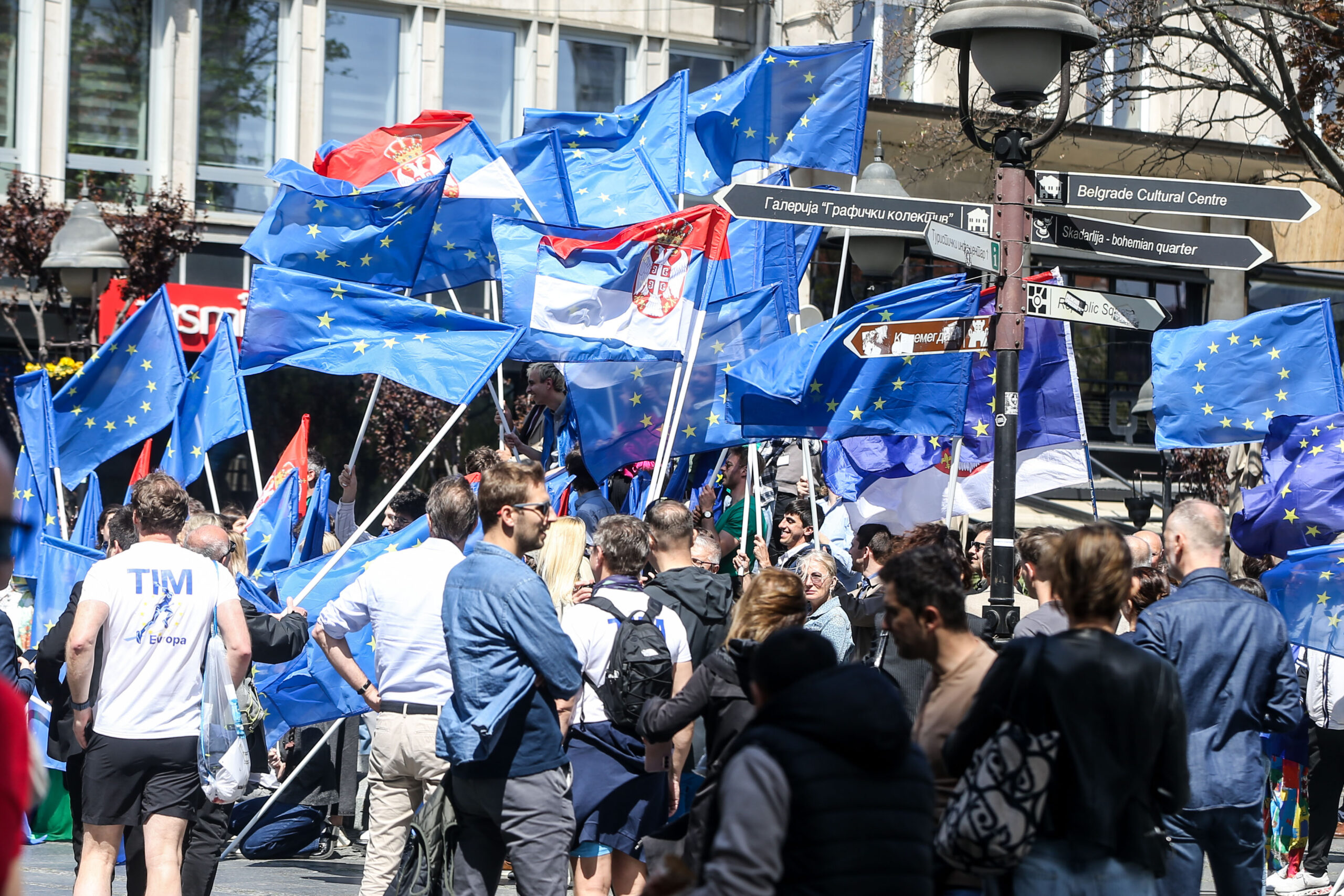
On the EU, the president lowers expectations: “We have less expectations… I’m not sure that it will happen till 2030 or even after that.” He adds a sovereignty refrain: “We’ll do our best to do necessary reforms, but we’ll keep our independence… we don’t listen to the orders.” This is the pattern of permanent candidacy: keep the symbolic value of the European path while deferring the material standards of membership (rule of law, independent institutions, media freedom, foreign-policy alignment).
The effect: the EU functions as a rhetorical shield; China as the operational anchor. The EU is discussed in the language of postponement; China in the language of delivery (jobs, investment, a “personal bond” with the leader).
Neutrality and sanctions: emotion instead of doctrine
Vučić underlines that Serbia is the region’s “only militarily neutral” country and that sanctions “have never been part of a solution,” invoking the 1990s. Emotionally persuasive — but a doctrine of neutrality requires scenarios, capacities and a partnership network; otherwise neutrality is a rhetorical cover that, in practice, leans on Chinese backing. Once you adopt Beijing’s normative red lines (Taiwan), neutrality takes on a decorative character.
Personalized diplomacy: politics as the relationship of two men
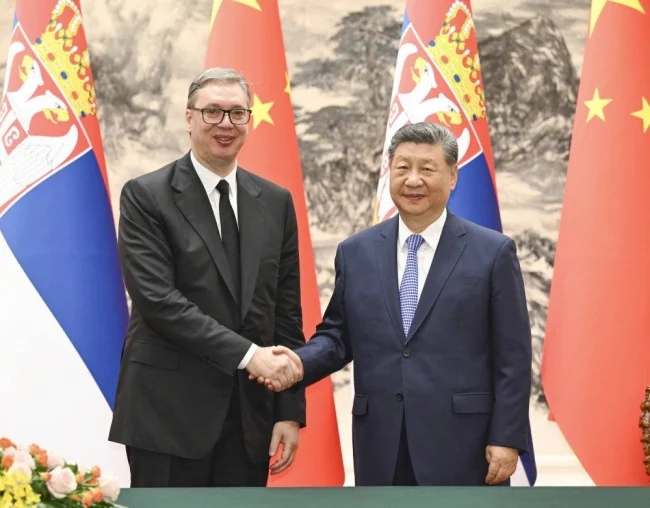
The most intimate passages describe meeting Xi: “I didn’t sleep an entire night… preparing,” the host “speaks before he [Vučić] says anything,” followed by a “state-visit invitation” as “the greatest honor.” Xi is “very humble… like an ordinary neighbor.” This is personalization of foreign policy — where leader-to-leader ties eclipse institutions. In systems with weak checks and balances, that style risks non-transparent obligations the public learns about after the fact.
“People-to-people” as an ornament to hard politics
The finale is soft: films, TV series, food, the “577” nickname anecdote, and the invitation: “Come to Serbia. That’s your second home.” This layer humanizes hard messages (Taiwan, sanctions, EU delays), turning them into a story of “friendship between peoples.” But without a public economic balance sheet and contractual transparency, soft power remains an ornament — a pleasant façade laid over the steel bars of realpolitik.
What is missing: numbers, standards, rules of the game
The interview lacks what separates propaganda from policy:
- Transparent contracts and subsidies per worker;
- Tax breaks — size, duration, conditions;
- Environmental and labor standards — and oversight;
- Local supplier networks and domestic value added;
- Risk assessment (dependence on a single market/employer/financier).
Without these, “ironclad friendship” remains a political metaphor — not a development policy subject to public scrutiny.
Scenarios and risks: three hard dilemmas
- Alignment without a security umbrella. Declaring loyalty on Taiwan creates clear normative alignment with Beijing. Without formal security guarantees, Serbia sits in a zone of asymmetric reliance: it pays politically without receiving a real umbrella.
- Long-term dependence on subsidies. If industrial policy rests on budget subsidies and “top-leadership care,” the risk is clientelism and fiscal fatigue. Year one looks like triumph; year ten feels like burden.
- Europe as narrative, East as practice. The European track remains in speeches while standards aren’t delivered. That lowers investment predictability, raises political risk, and nudges the country toward state-capitalist models with thin institutions.
A manifesto of eastern dependence — without the “bill” before the public
Taken together, the CGTN interview is a manifesto of eastern anchoring. Security is “imported” via a spectacle of power; history is instrumentalized as the moral groundwork for today’s alignment; the economy is proven by a totem (Smederevo) without a public cost-benefit table; the EU is deferred; neutrality is recited, while real policy is moored in Beijing through “One China” and personalized leader ties.
From an opposition vantage point, the demand is trivial — and therefore explosive: show the bill. Contracts, subsidies, tax breaks, environmental and labor standards, obligations and risks; disclose the net effect on GDP, wages, exports, suppliers. Until that happens, “ironclad friendship” remains primarily the regime’s rhetorical capital, not a verifiable development strategy for society.
Notable quotes
- „I feel… safer and more secured after I saw that event yesterday.“
- „This is our holy task… keep the truth alive and no one will be able to change it.“
- „It’s not about ruining the current international order… it’s about… rejuvenating it.“
- „If someone says something about Taiwan, that’s Chinese territory… I don’t have any kind of dilemmas.“
- „We have less expectations… I’m not sure that it will happen till 2030 or even after that.“
- „Sanctions have never been a part of a solution.“
All quotes were delivered by the president in his CGTN interview; the interpretation and emphasis in this text are analytical.
And even after more than 24 hours, the interview with Serbia’s President, Aleksandar Vučić, is still featured on CGTN’s homepage.









Šta vi mislite?
Još nema komentara. Budite prvi koji će otvoriti diskusiju.