



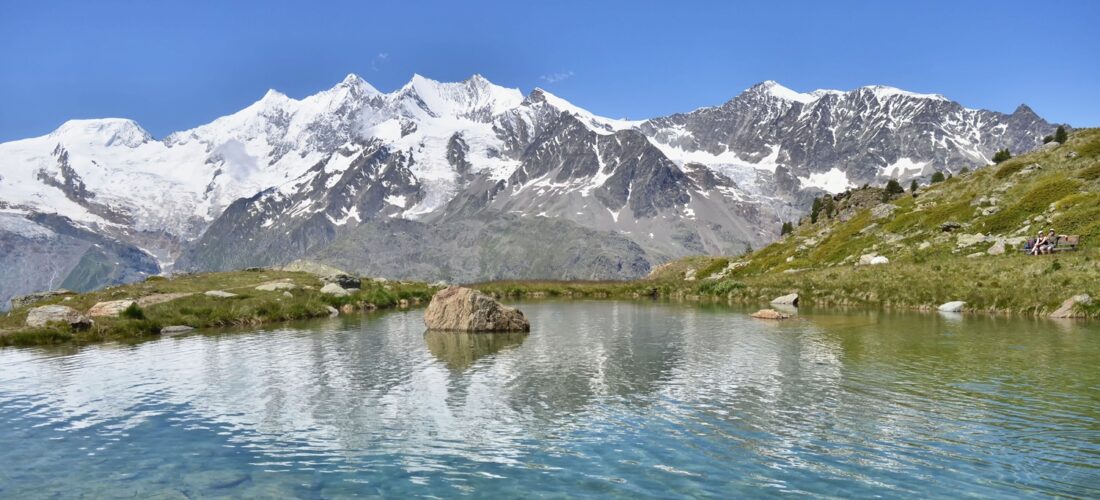
Glaciers in Switzerland have lost 5.5 percent of their glacier mass this year due to heat waves and low snowfall, experts report.
This is the second largest recorded decrease in glacier volume in percentage terms.
“Alpine glaciers have no prospects for long-term survival under such conditions,” states a release published today by the Swiss glacier monitoring service GLAMOS and the Swiss Academy of Sciences.
This trend has worsened in recent years. Experts note that in just the past five years, the amount of ice in Switzerland has decreased by almost one fifth.
The report confirms concerns that global warming is causing serious damage to Europe—the continent that is warming the fastest.
“The warming we are now experiencing can be 100 percent attributed to anthropogenic climate change. That’s simply the case,” claims Matthias Huss, who heads GLAMOS.
Without emissions caused by humans or fossil fuels, we would currently have no warming, he added.
A record retreat of glaciers in Switzerland occurred in 2022, when summer heat, scant winter precipitation, and an unusual amount of reddish dust brought by winds from the Sahara caused the glaciers to darken and absorb more heat.
Huss said that the snow cover in winter is important for two reasons.
“On the one hand, it protects the bare ice from melting, and on the other, the more snow there is, the greater the potential to retain some of the snow at high altitudes and form new ice,” said Huss, who is a professor of glaciology.
The large-scale melting of ice in the Alps is not an isolated case. Experts note that global warming has contributed to the destabilization of terrain in the Himalayas, which collapsed in August and caused catastrophic floods across Nepal.
Satellite images show a drastic reduction of glaciers in areas such as Greenland and Antarctica over the past fifty years or so.


Your perspective is part of the story
Start the discussion and be the first to comment on this story.