



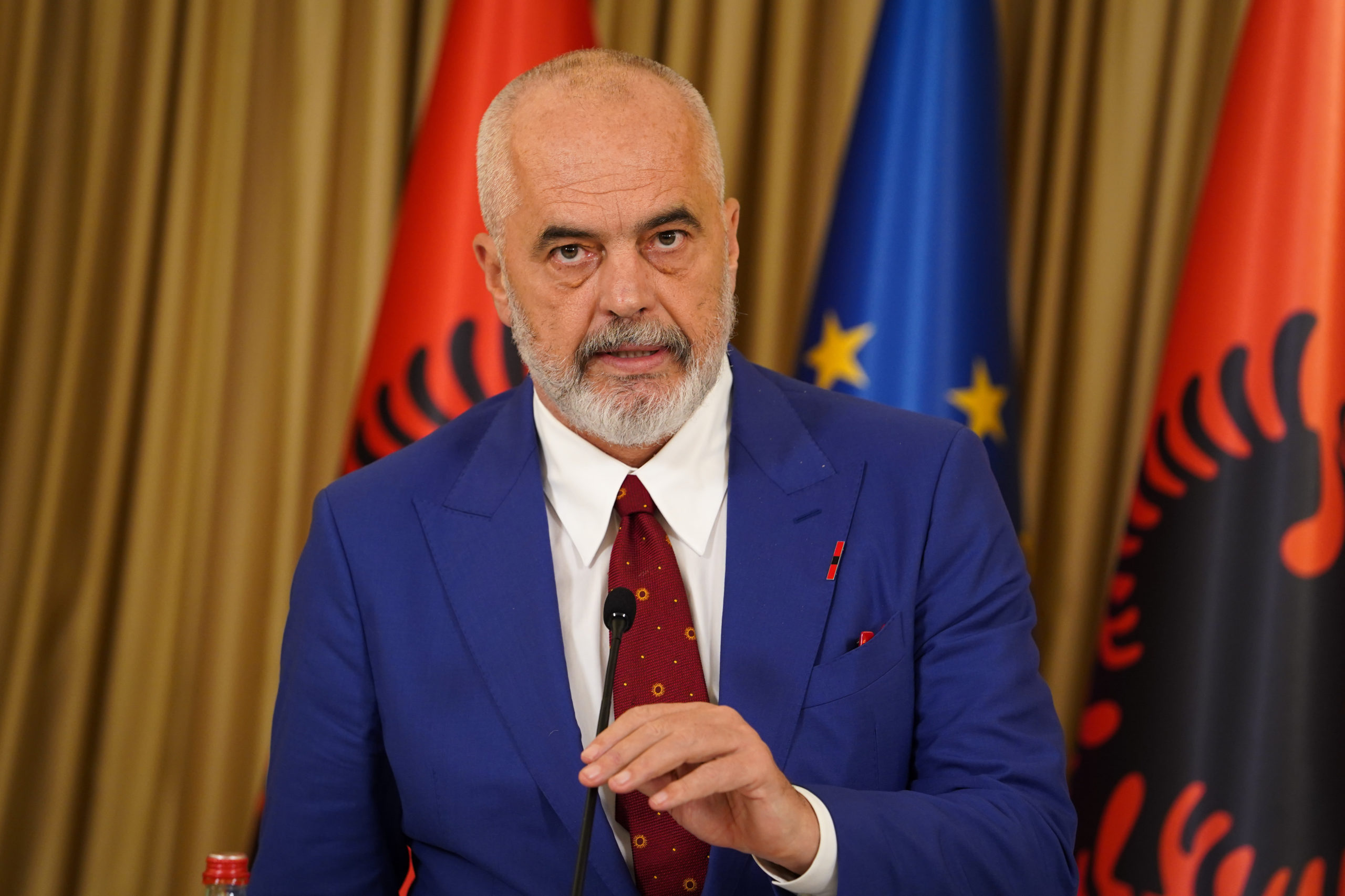
Albanian Prime Minister Edi Rama took a firm stance today regarding the protests shaking the country, stating that the state must not negotiate with those who resort to violence.
At a press conference, Rama expressed concern over attacks on police officers, emphasizing that their role is to protect citizens and maintain public order, reports the Albanian Daily News portal.
Rama also drew a parallel with the past, noting that Albania has gone through periods of similar unrest and continues to bear the consequences.
The student protests, which have been held for six consecutive days across Albania, have been marked by clashes with police and attacks on public institutions.
Rama said that only a small number of participants are protesting peacefully and that some young demonstrators have been drawn into a broader movement driven by forces whose goal is the destabilization of institutions.
He also criticized what he described as an atmosphere of hostility toward police officers, saying that the men and women in uniform, whose task is to protect citizens, are increasingly exposed to attacks, including those through media reporting.
This morning, Rama, together with Minister of Internal Affairs Ervin Demo, met with senior police officials.
Demo said that yesterday’s events crossed a “red line,” assessing that the situation can no longer be considered a student protest.
He said that in the attack on the police station in Tirana, several police officers were injured while defending the facility.
“What happened yesterday crossed the red line. Demonstrators attacked police station number 3, targeting the building and its staff,” said Demo, who added that “individuals involved in the violence took refuge in the headquarters of a political entity, which raised questions about the motives behind the unrest.”
He added that the government and Prime Minister Rama are ready for dialogue but will not tolerate violence.
At the same time, more than 300 university professors demanded the resignation of Edi Rama and the formation of a transitional government, condemning what they described as unjustified police violence against students during the anti-government protests.
In a joint statement, they expressed concern over reports of human rights violations and called on the government to respond to students’ demands in order to reduce tensions.
They called on police officers to stop using force against students and to refuse to carry out unlawful orders, warning that responsibility for such actions would be individual.
The signatories also appealed to diplomatic missions in Tirana to publicly advocate for the protection of citizens’ rights and called on demonstrators to avoid destroying public and private property.
Drawing a parallel with the student movement in Albania in 1991, they called on citizens to show solidarity with the young demonstrators.



Your perspective is part of the story
Start the discussion and be the first to comment on this story.