



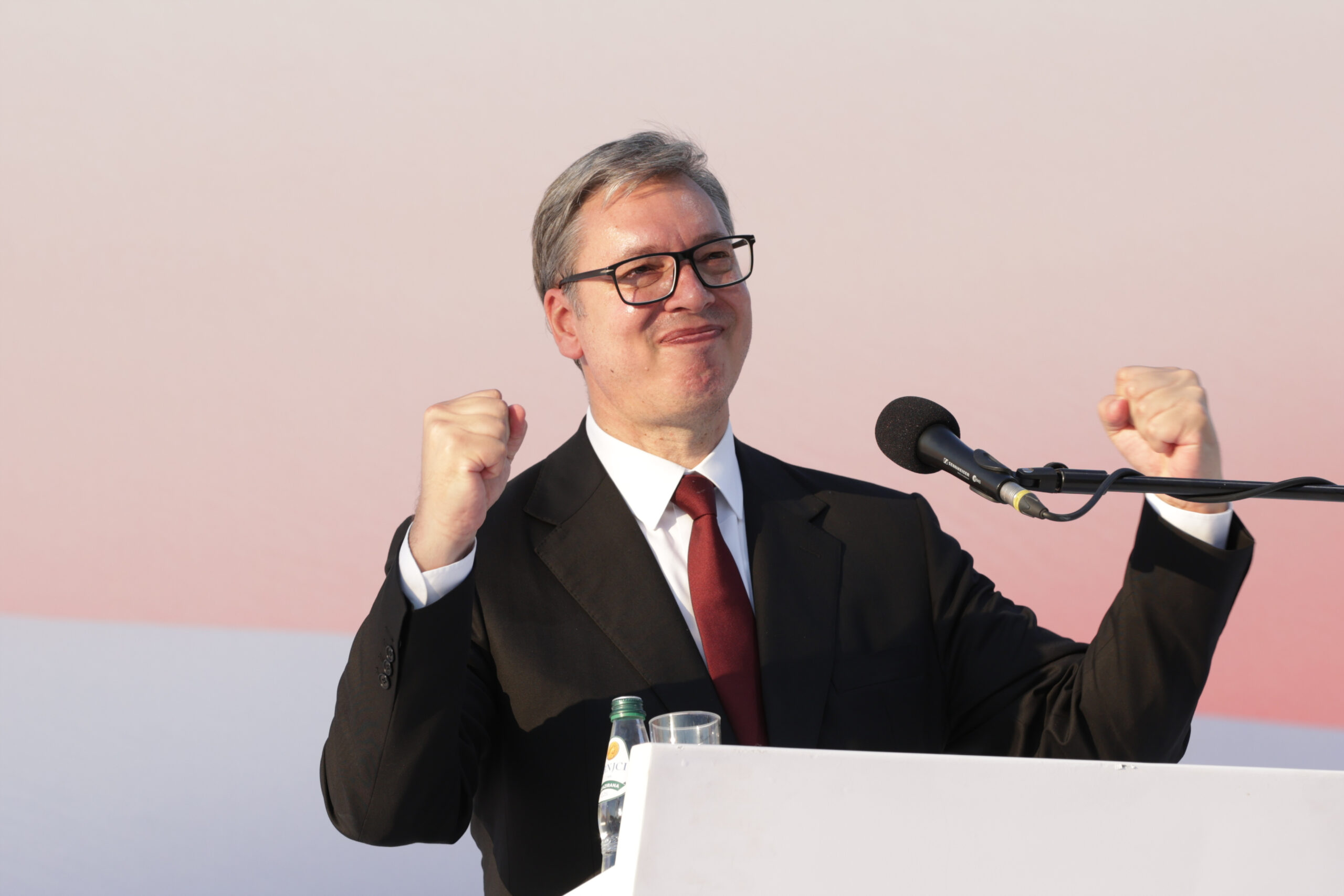
Serbia has recorded a decline in the majority of areas on the democracy development ranking over the past year, particularly in the areas of access to justice, freedom of association and assembly, as well as personal integrity and security, according to a new report by the International Institute for Democracy and Electoral Assistance (IDEA).
It is pointed out that continued pressure on civic space, the media, and civil society in Serbia requires vigilant attention. As stated, since Serbia is engaged in the EU accession process, the membership criteria related to the rule of law give the Union significant power to demand the removal of these restrictions.
It is added that in Serbia, officials have cited claims of poor management by USAID under U.S. President Donald Trump to justify raids on civil society organizations.
The report assessed that the three sharpest declines in democratic development worldwide were recorded by Afghanistan, Mauritania, and Myanmar, as countries with weak performance in this area, but that among the states that suffered the greatest deterioration are also those with mid-range performance—Georgia, Israel, Malawi, Serbia, and the USA.
Countries are ranked based on four main categories of democratic performance—representation, rights, rule of law, and participation, with each divided into factors and subfactors.
Serbia ranks 108th out of 173 countries in representation, 81st in rights, 80th in rule of law, and 87th in participation, according to the new report by the intergovernmental organization based in Stockholm.
When it comes to Europe, the report shows that democracy is regressing in more than half of European countries and that in the past five years, more steps backward than forward have been made in this area.
It is stated that in Europe between 2020 and 2025, there were 77 deteriorations within 154 democracy indicators, compared to only 42 improvements.
More than half of European countries recorded deterioration in at least one factor, with the most frequent declines in civil liberties, access to justice, and electoral integrity.
The largest share of deteriorations was recorded in Eastern Europe, which includes Russia—28, 18 in Central Europe, 16 in Southern Europe, and 15 in Northern and Western Europe.
This year’s Global State of Democracy Report examines two interrelated themes. The first part analyzes changes in the quality of democracy in different regions, including a detailed case study on the consequences of declining democratic standards in the USA and how these developments reflect on the international order based on the rule of law.
The second part provides a thematic analysis of the mutual influence of democratic backsliding and violent conflict, showing how different levels of democracy affect the likelihood of conflict outbreak, both within states and across their borders.
The findings indicate that democratic backsliding can increase the risk of violent conflict, while strong democratic institutions can serve as a barrier to violence.


Your perspective is part of the story
Start the discussion and be the first to comment on this story.