



Turkey has been waiting almost 40 years to join the European Union (EU), while Ukraine, on the other hand, received candidate status just a few months after the start of the Russian invasion. Behind this contrast, European enlargement oscillates between political demands, institutional deadlock, and strategic imperatives, the Belgian public broadcaster RTBF assessed today.
Will Turkey, Ukraine, or Moldova ever join the EU? For Turkey, this question has been on everyone’s mind for 39 years. The country applied in 1987. No other candidate country has waited this long, and obviously, the accession process is still not finished.
The European Parliament adopted a new report on Turkey on June 17. The text once again sets conditions – accession negotiations with Ankara cannot continue without progress in the rule of law, fundamental rights, and democracy. These negotiations have been stalled since 2018.
Professor of Political Science at the Free University of Brussels, Jean-Michel De Waele, told RTBF that the EU should have “digested the accession of Central and Eastern European countries” long ago.
The 2004 enlargement, which increased the Union from 15 to 25 member states, was part of a strategy to reunite the continent after the Cold War. But since then, the pace has slowed significantly.
Today, the demands of Ukraine and Moldova have once again put this issue at the heart of the European agenda, in a context that is far more strategic than strictly institutional. They show that enlargement remains a process governed by criteria, but one that is deeply influenced by political and geopolitical dynamics of power.
Why is this process, often presented as technical and merit-based, so dependent on the political context, RTBF asked.
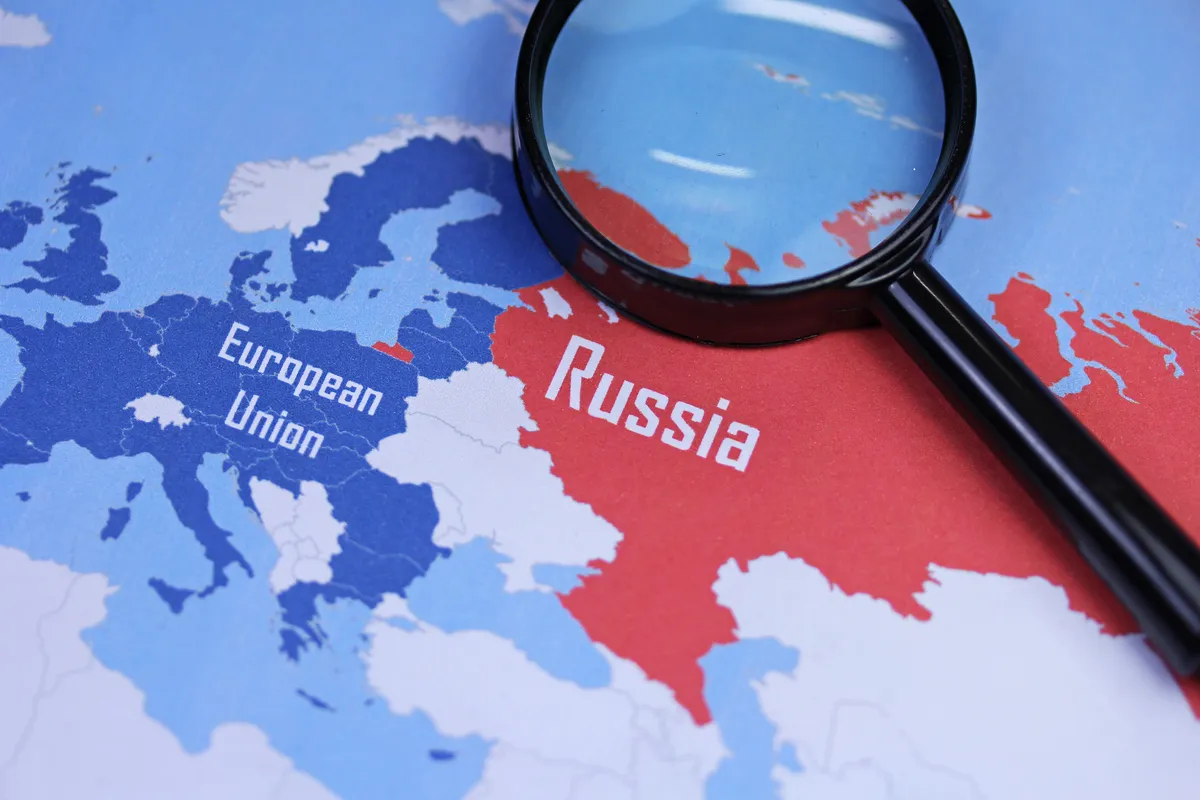
Today, the EU candidate countries are located in the Western Balkans, Eastern Europe, and the Caucasus: Albania, Bosnia and Herzegovina, Georgia, Moldova, Montenegro, North Macedonia, Serbia, Turkey, and Ukraine. Kosovo is also a potential candidate, although not all EU member states recognize it.
This geography says a lot about the current stakes. Many countries knocking on the Union’s door are located in areas where European, Russian, Turkish, and Chinese influences intersect.
De Waele believes this is a reminder that enlargement has always been more than just a mechanism for economic integration – it also serves to stabilize the European neighborhood.
“We have realized that these borders can be threatened, that the presence of (Russian President Vladimir) Putin or China on these borders may not be the best way to guarantee security and a reliable economy,” he said.
Enlargement therefore, in his view, appears as a question of stability, but also as a “question of the identity and future of the EU.”
However, geopolitical considerations alone are not enough to open the doors to the Union. To join, a country must first meet a series of criteria and follow the procedure outlined in Article 49 of the Treaty on European Union.
A candidate country must be a European state, in the broadest sense, which means not only geographically, but also through its historical and political ties to Europe, to respect the values of the Union and commit to promoting them.
Since its founding, the EU has expanded step by step, and each enlargement has followed a different logic.
However, enlargement has not only advanced the European project, it has also complicated decision-making and, through its slowness, fueled some of the current frustrations.
The first enlargements led to the admission of Western and Northern European countries – Denmark, Ireland, and the United Kingdom in 1973. Greece joined in 1981, followed by Spain and Portugal in 1986. These accessions accompanied the democratic consolidation of countries emerging from dictatorships or authoritarian regimes.
De Waele emphasized that this political dimension has always taken precedence over purely economic preparation.
“When Greece was admitted to the European Union, it was also to stabilize it,” he said, adding that there were countries that were not entirely ready to join, but did so, even before the Eastern Bloc countries, for geopolitical reasons.
The most significant enlargement occurred in 2004, with the accession of ten countries, including Poland, Hungary, the Czech Republic, Slovakia, Slovenia, and the Baltic states.
Bulgaria and Romania followed in 2007, and then Croatia in 2013. Since then, no new country has joined the EU, RTBF added.

Your perspective is part of the story
Read other perspectives and join the conversation.