



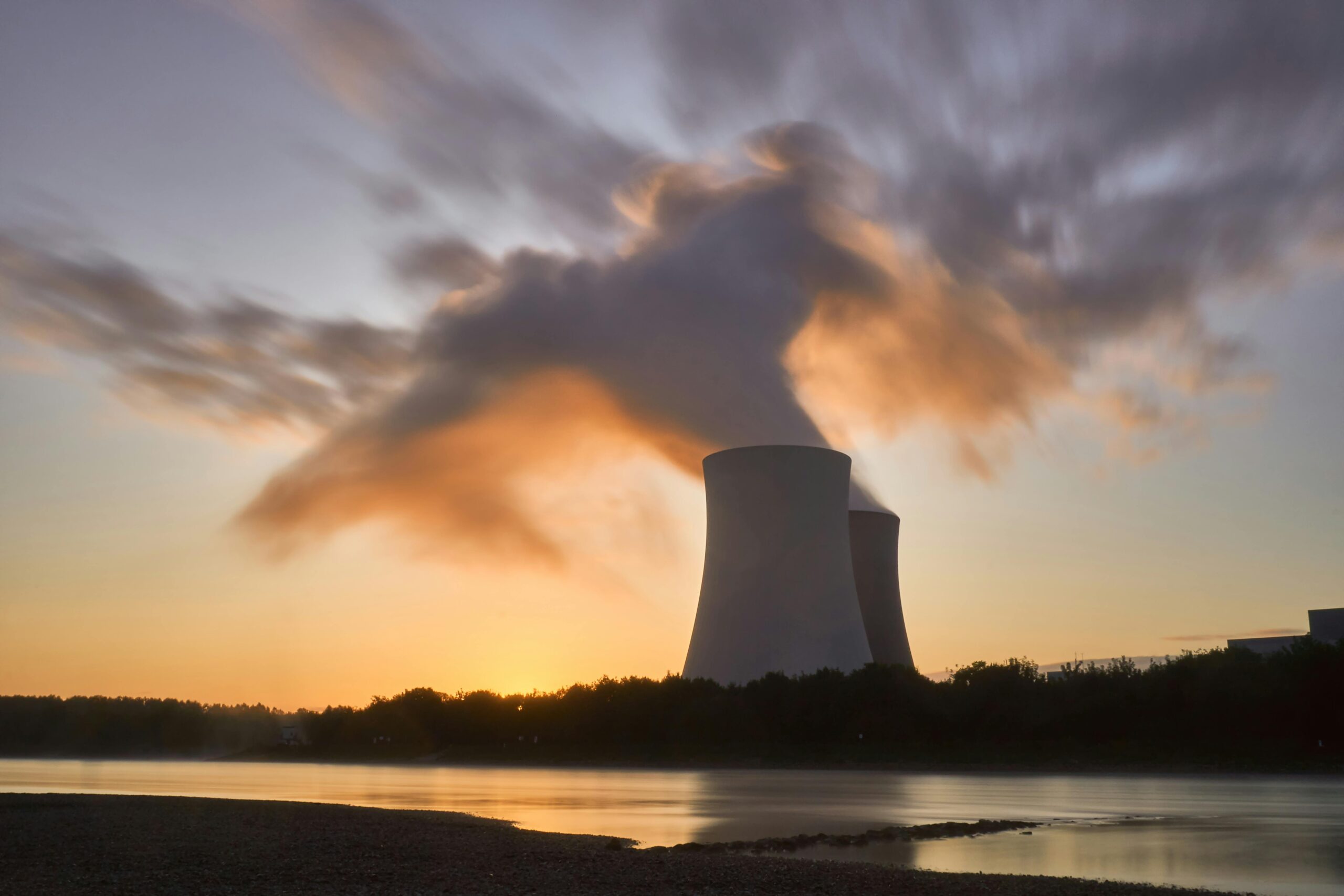
Serbia could build a nuclear reactor in about ten years, but it will take an entire generation to develop experts capable of designing, safely operating, and supervising it, said Christophe Lecourtier, Director General of the French Development Agency (AFD), in an interview with Nova Ekonomija.
“France is committed to supporting the enhancement of Serbia’s energy sovereignty, and for this purpose is ready to share the recognized expertise of the company EDF (the state-owned electric utility company) in the field of nuclear energy for civil purposes,” said Lecourtier, who was on an official visit to Serbia and spoke with Minister of Mining and Energy Dubravka Đedović Handanović about the development of nuclear energy in Serbia.
Asked what the study on human resource development for the needs of the nuclear program has shown, which, according to Serbian Minister of Mining and Energy Dubravka Đedović Handanović, is being conducted with AFD’s support, Lecourtier said that work on the study only began at the start of September and that it is too early to comment on its results.
“What is already clear, however, is that the nuclear program is essentially a program for developing human capacities. A reactor could be built in about ten years, but it takes an entire generation to develop the skills necessary for its design, safe operation, and supervision,” said Lecourtier.
He emphasized that cooperation with EDF is particularly useful in this regard because that “company has decades of experience in training thousands of experts in atomic energy and managing their work.”
“This experience will help Serbia to accurately determine its needs. At the same time, it will help to establish the right organizational and educational foundations across the entire value chain, from universities and training centers to the future operator. AFD finances and supports the construction of these foundations. Our horizon extends far beyond the year 2040. That is the true measure of the commitment France has undertaken: this is a partnership created to last,” said Lecourtier.
Asked whether Serbia is on the right path toward a green transition and greater use of renewable energy sources, Lecourtier said that Serbia’s European path is the best compass for this.
“Serbia’s transition rests on three pillars, and AFD is involved in each of them. The first pillar is public policy. Since 2023, AFD, together with the World Bank and Germany’s KfW, has been supporting Serbia in implementing the European Green Deal, through financing two projects totaling 270 million euros,” stated Lecourtier.
He emphasized that a reduction in greenhouse gas emissions by 33.3 percent by 2030 is planned, and significant resources have been allocated to achieve this goal.
The second pillar, according to him, is long-term planning. “AFD supports the development of energy strategies and models with projections up to 2050, covering nuclear energy, renewable energy sources, and the gradual phase-out of coal. Work in this area is based on an equal dialogue between experts from the Ministry of Mining and Energy and their French counterparts,” said the AFD director.
The third pillar, according to him, is the network itself, so AFD supports EMS, the transmission system operator, in the digitalization of the network in Serbia and its integration into the European electricity market, as stronger interconnections make supply more stable and lower electricity prices.
AFD’s priority, says Lecourtier, is to support Serbia on its path to European integration and the adoption of EU legal standards.
“The value of our projects in this country now exceeds 1.1 billion euros. In the energy sector, our activities relate to sectoral reforms and network modernization in cooperation with EMS, and now also to the nuclear program. Besides energy, AFD is involved in improving urban mobility in numerous Serbian cities, railways, and environmental infrastructure. In the future, our ambition is to remain a long-term partner for this transformation,” said Lecourtier.
Your perspective is part of the story
Read other perspectives and join the conversation.