



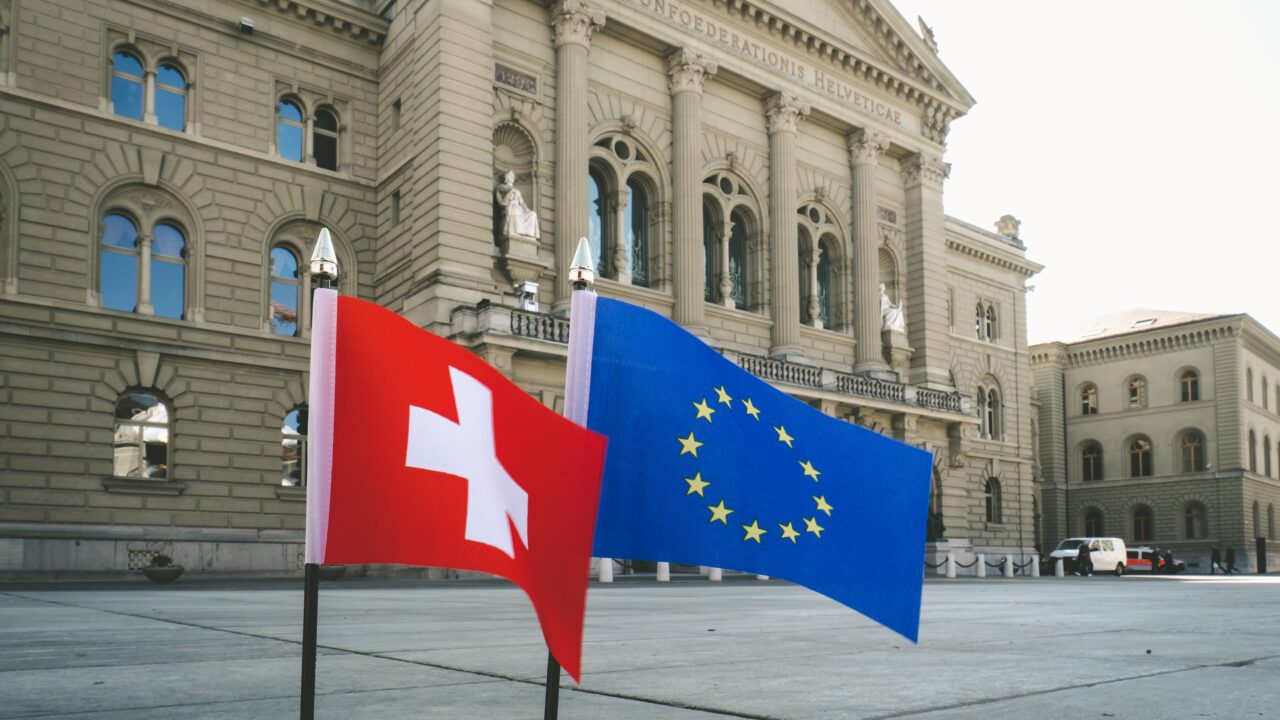
Swiss citizens will decide in a referendum on Sunday, September 27, whether they want a more restrictive definition of their country’s neutrality, which would, among other things, mean that Switzerland could not impose international sanctions on warring parties.
The initiative for the “preservation of Swiss neutrality” calls for a constitutional provision stating that Switzerland’s neutrality is “permanent and armed,” according to a statement on the government’s website.
If the initiative were supported, Switzerland would not be able to join any military or defense alliance, nor cooperate with such alliances, except in the case of being the target of a military attack or an imminent threat of attack.
“Furthermore, it must not participate in military conflicts between third countries nor impose sanctions on warring states. Exceptions would include United Nations sanctions and measures aimed at preventing the circumvention of sanctions,” the proposed constitutional amendment states.
It is also added that Switzerland should use its neutrality as an advantage in its role as a mediator.
Although Switzerland’s neutrality has been enshrined in the Constitution since 1848 and most of the initiative’s demands have already been met, the war in Ukraine has once again raised questions about its non-involvement in foreign conflicts.
Supporters of the initiative believe that the government crossed a red line in 2022 after the Russian invasion of Ukraine, when it accepted EU sanctions against Moscow and has since continued to implement other measures.
In their view, comprehensive neutrality also entails refraining from economic sanctions, and by adopting EU sanctions Switzerland has become a participant in the war.
Proponents of the changes believe that the country’s neutrality must be permanent, not applied on a case-by-case basis, in order to ensure that the country remains a reliable partner, writes the Berlin portal table.media.
The initiative also aims to prevent what its supporters describe as a “dangerous rapprochement with EU and NATO structures.”
The initiative was launched by the national-conservative organization “For Switzerland” (Pro Schweiz), and is supported by the right-wing Swiss People’s Party (SVP), the largest party in the lower house of parliament, represented in the Swiss government, while the other parties in the government oppose this initiative.
The Swiss government and parliament claim that the current approach has proven beneficial and that the initiative would harm the country’s interests.
The government believes that Switzerland must retain flexibility in applying neutrality in a way that serves its national interests.
Opponents also warn that the initiative would jeopardize Switzerland’s security cooperation with other countries, emphasizing that such cooperation cannot begin only after Switzerland comes under attack.
Russia has also joined the debate on the initiative. Russian Foreign Ministry spokeswoman Maria Zakharova recently called on voters via Telegram to support the initiative. She criticized Switzerland for supporting EU sanctions against Russia and accused it of no longer respecting neutrality.
Public opinion polls show that citizens will reject this initiative.



Your perspective is part of the story
Start the discussion and be the first to comment on this story.