



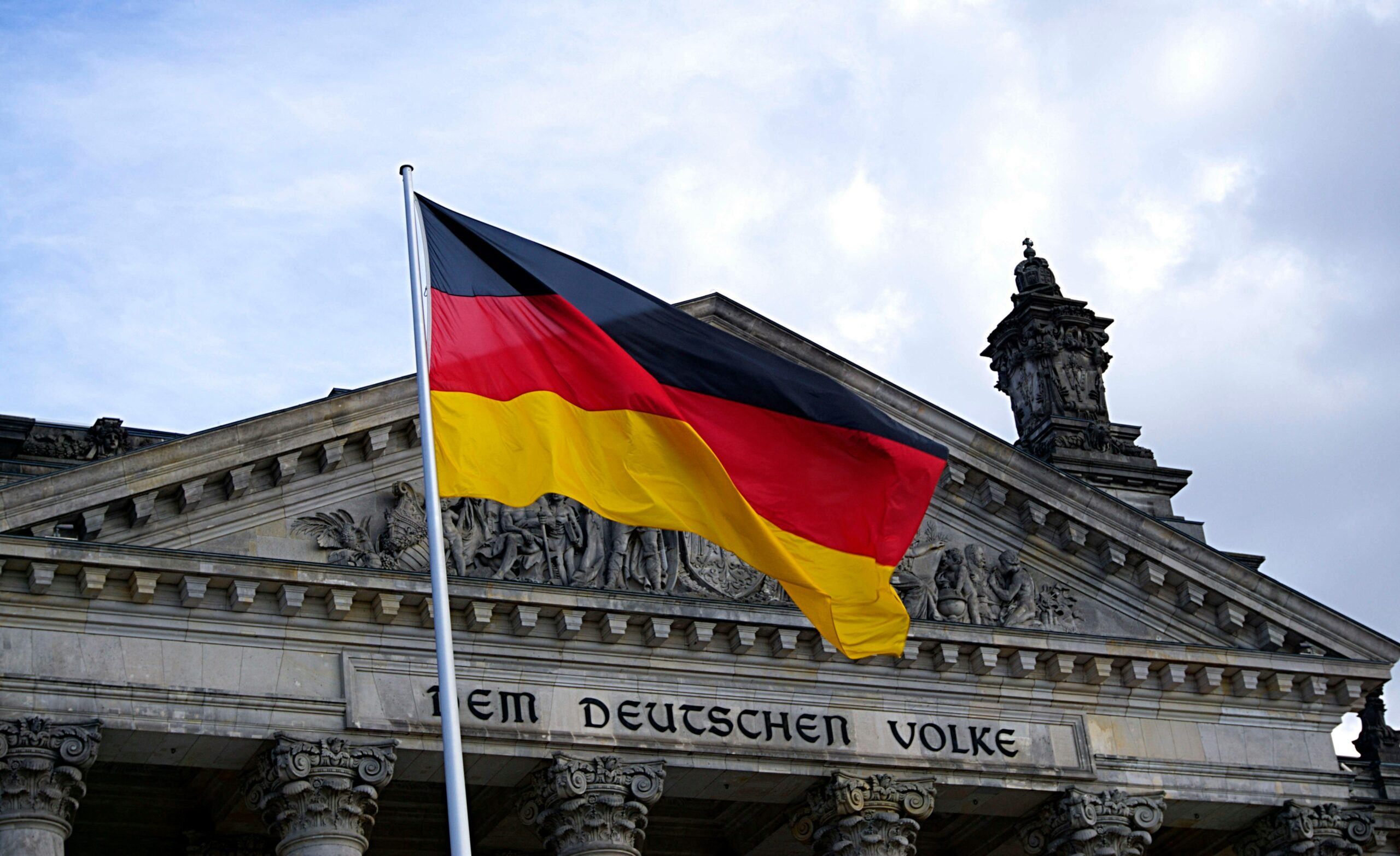
For years, Germany and Russia cooperated almost perfectly: Russia supplied energy at favorable prices, thus helping German industry achieve great success on world markets, writes Deutsche Welle (DW) today.
Such a policy was advocated on the German side from the early 2000s first by Chancellor Gerhard Schröder (SPD), and later by Chancellor Angela Merkel (CDU). On the Russian side, then as now – Vladimir Putin.
Even when Russia annexed the Ukrainian peninsula of Crimea in 2014, business continued: the agreement to build the direct Nord Stream 2 gas pipeline between Russia and Germany, bypassing Ukraine as a transit country, was signed only after the annexation of Crimea. Other European countries and the USA warned even then that Russia would gain a powerful means of leverage with this pipeline.
It turned out they were right. Russian tanks entered Ukraine on February 24, 2022. Putin denied that country the right to independent existence. German hopes for a stable European order, the democratization of Russia, and the continuation of a lucrative economic model were dashed.
“Immediately before the invasion, there was a widespread belief that, rationally speaking, there was no reason to attack Ukraine, because the economic, military, and political cost of starting a war would be too high for Russia,” says Mario Bauman, a Russia expert from the German Council on Foreign Relations, explaining the surprise and shock that then prevailed in Berlin.
“Their own rationality was projected onto Russia. The imperialist and revisionist ambitions of the regime were underestimated,” Bauman told DW.
Since then, nothing in the relations between the two countries has been as before. Chancellor Olaf Scholz (SPD) announced a “turning point” in foreign and security policy in 2022.
Since then, the German military has been rapidly arming itself. Defense Minister Boris Pistorius (SPD) stated the following year, “We must be capable of war,” and critics still reproach him for contributing to the escalation of the situation with that statement.
Germany ended its decades-long energy dependence on Russia and halted Nord Stream 2. At the end of September 2022, unknown perpetrators blew up one of the two branches of the pipeline. The German federal prosecutor suspects that a Ukrainian group is responsible for this.
A whole series of EU sanctions has long reduced trade relations between Russia and Germany to a minimum. Cooperation between state institutions in culture, science, and education has also been practically suspended.
While Olaf Scholz’s government initially hesitated before every new step in supplying weapons to Ukraine, Friedrich Merz mostly rejected such restraint, including in his statements. “Ukraine must win the war. Russia must lose it,” he said in 2024 as leader of the opposition CDU.
When he became chancellor in 2025, he spoke of the “economic exhaustion” of Russia, to which the West must “contribute.”
However, so far there has not been much of that exhaustion.
Even today, Russia does not show serious willingness to compromise in order to achieve peace, writes DW.
Meanwhile, Germany is feeling the consequences of its military support for Ukraine. The federal government has long suspected that Russia is behind hacker attacks on state institutions and critical infrastructure.
When, in August 2026, at Leipzig airport, through which a large part of military aid to Ukraine is delivered, a drone with explosives was found and deactivated among Ukrainian transport planes, the German government no longer had any doubts. For the first time, it publicly accused the authorities in Moscow of such an incident.
The Russian House in Berlin and the Russian Consulate General in Bonn were closed. The German government believes that both institutions served as centers for espionage. Moscow responded by closing the Goethe Institutes and the German Consulate General in St. Petersburg.
Putin rejects claims that Russia is responsible for the incident in Leipzig and speaks of a “serious mistake.” Foreign Minister Sergei Lavrov called the accusations “the beginning of a real war.”
Mario Bauman, however, believes that “one should not succumb to fears that are deliberately stoked, because that is part of Russia’s strategy to weaken Germany and Europe.”
Johannes Peters, a maritime security expert at the University of Kiel, thinks similarly. He also sees the German government’s hesitation to act more decisively against ships of the Russian “shadow fleet,” which are linked to sabotage and espionage, in this light.
Other European countries are acting more decisively, and contrary to fears and, above all, contrary to Russian rhetoric, nothing is actually happening, Peters told DW.
The federal government is also under pressure domestically due to the success of Alternative for Germany (AfD), a party that is partly far-right, in state elections.
In the latest ARD Deutschlandtrend survey, the share of respondents who believe that military aid to Ukraine is excessive has risen to 42 percent.
“If public support continues to weaken in the long term, the government will at some point have to respond,” says Loynig.
For now, the German government continues to pursue its current policy. Merz made this clear once again in the Bundestag after the AfD’s electoral victory.
However, there are not only differing opinions among politicians on how to deal with Russia and the war in Ukraine. Political scientists and other experts are also divided.
Johannes Varwick from the University of Halle, in Saxony-Anhalt, believes that the time for a policy change has long since come.
“German and European policy towards Ukraine resembles a mixture of slogans calling for perseverance and a wish list,” Varwick recently told DW.
“It is high time for a change of course. Germany should put pressure on Ukraine to move closer to the latest American proposals, which aim at achieving a compromise and which might lead to a political solution.”
Mario Bauman from the German Council on Foreign Relations has a different view.
“Support for Ukraine is still the best investment in preserving German and European interests. The federal government has realized this and should stick to this course, but also continue to communicate it clearly,” he states.
It is important, he adds, that Berlin acts together with its European partners.
The war in Ukraine has already lasted longer than the First World War, and there is no end in sight. It is illusory to hope that German-Russian relations could return to their previous state any time soon.

Your perspective is part of the story
Start the discussion and be the first to comment on this story.