



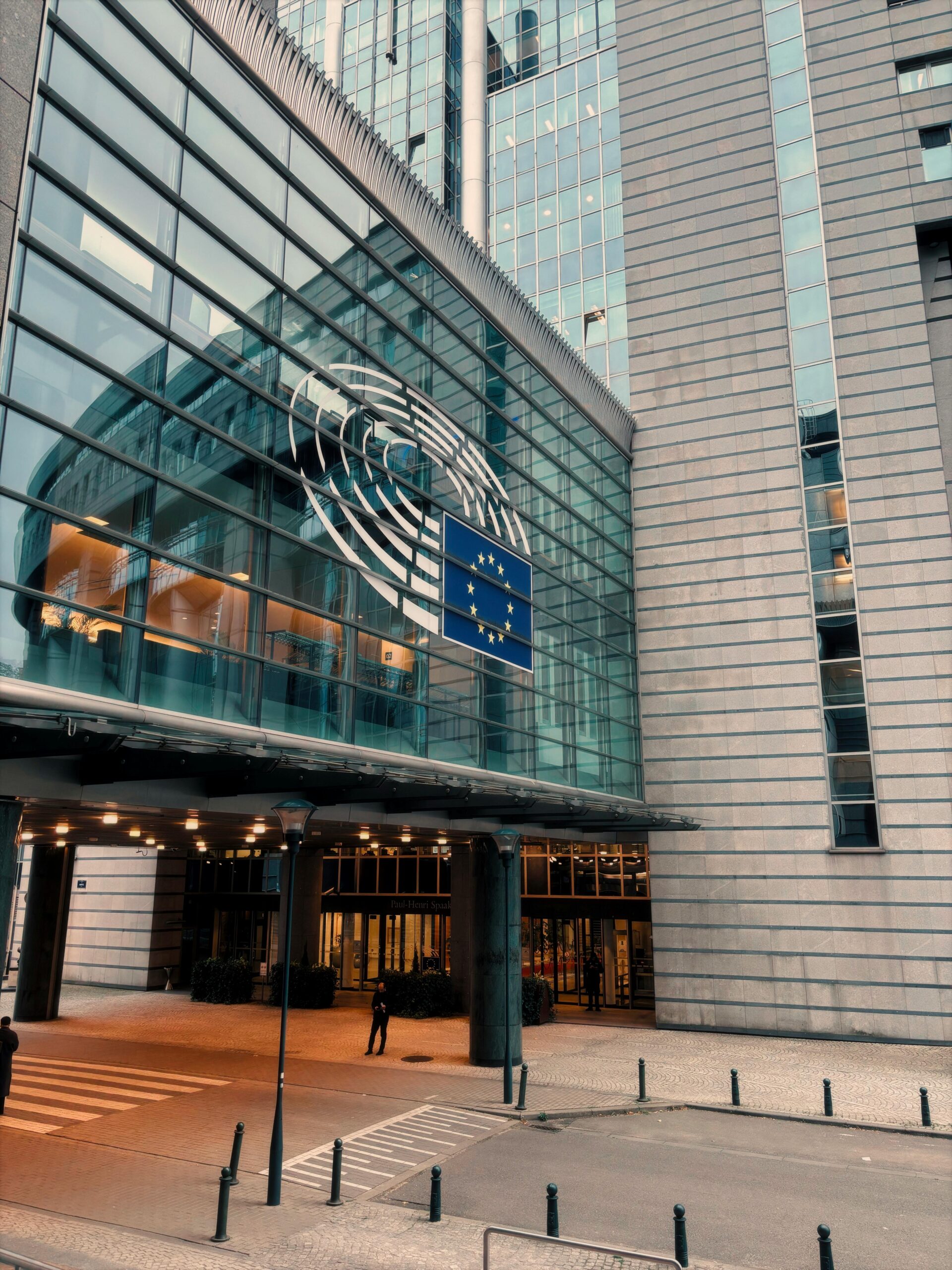
The US Ambassador to the European Union, Andrew Pazder, stated that the EU accuses the US of violating the trade agreement by introducing additional tariffs, while at the same time undermining that agreement itself by introducing “protectionist measures disguised as climate policy”—through the Carbon Border Adjustment Mechanism (CBAM).
In an op-ed for the Financial Times, Pazder emphasized that CBAM is essentially no different from US tariffs on steel and aluminum, and that both policies aim to protect domestic producers, resulting in increased import prices.
Pazder recalled that the US began imposing tariffs on steel and aluminum in 2018 to maintain a strong domestic industrial base, and has since expanded tariffs to machinery, equipment, and other products containing steel and aluminum.
The EU condemned these measures as a violation of the Framework Agreement on Trade between the US and the EU, demanding that they be lifted by the end of the year.
“Nevertheless, the EU has announced its own border tax on many of the same products through CBAM. The EU calls CBAM a climate measure targeting the steel and aluminum content, but a tariff is a tariff, even under a different name,” Pazder said.
He assessed that protesting against US national security measures while simultaneously introducing protectionist barriers represents double standards.
“If the EU opposes America adjusting its policies to domestic priorities, it cannot credibly defend its own parallel adjustments, especially while accusing the US of violating a bilateral agreement that it is itself undermining,” the US ambassador stated.
Pazder added that the US imposed tariffs on steel and aluminum and their derivatives to protect American producers from a sudden increase in imports of these products from countries that subsidize their production, especially from China, which is why the EU also imposed a 50 percent tariff on steel imports.
“CBAM differs in form, but not in substance,” Pazder said, explaining that importers of iron, steel, aluminum, and related products must report carbon emissions in the production process subject to CBAM.
Steel and aluminum are materials with the highest carbon content, that is, whose traditional production in blast furnaces releases a large amount of carbon dioxide emissions, so CBAM significantly increases the price of imported products covered by this mechanism.
“Essentially, both policies represent adjustments to protect domestic producers from unfair competition, whether it is due to laxer environmental regulations or subsidized excess capacity,” Pazder stated.
He added that tariffs on steel and aluminum were introduced in accordance with Section 232 of the US Trade Expansion Act (which allows the US President to restrict imports or impose tariffs to protect national security) due to threats from foreign excess capacity to the domestic metals sector.
CBAM, he added, was created to prevent “carbon leakage,” that is, the relocation of production to countries with less stringent climate standards. This protects European companies subject to the EU Emissions Trading System (ETS), which provides for heavy penalties for exceeding permitted greenhouse gas emissions, particularly affecting energy-intensive industries such as steel and aluminum.
“In both cases, the measures increase import costs to protect local production. The parallels are undeniable. A shipment of machinery containing steel faces additional US tariffs based on metal content. In the EU, the same goods face charges based on production emissions under CBAM. One is presented as a security policy, the other as a climate policy. Both increase the price of targeted imports compared to domestic options,” Pazder emphasized.
He added that, while the US has significantly reduced the number of products subject to tariffs, the EU plans to expand the list of products subject to CBAM, which is contrary to the obligations under the Framework Agreement.
“CBAM undoubtedly protects EU producers, while putting imports from countries without equivalent carbon emission taxes at a disadvantage. In doing so, Brussels is doing exactly what it criticizes the US for,” Pazder stated, emphasizing that if border duties are illegitimate as a national security instrument, then they are also illegitimate as a tool in a “climate crusade.”
Pazder concluded that the EU presents itself as a defender of rules-based trade against protectionism, but that accusations against the US for allegedly violating the Framework Agreement, while simultaneously introducing CBAM, undermine its credibility.


Your perspective is part of the story
Read other perspectives and join the conversation.