



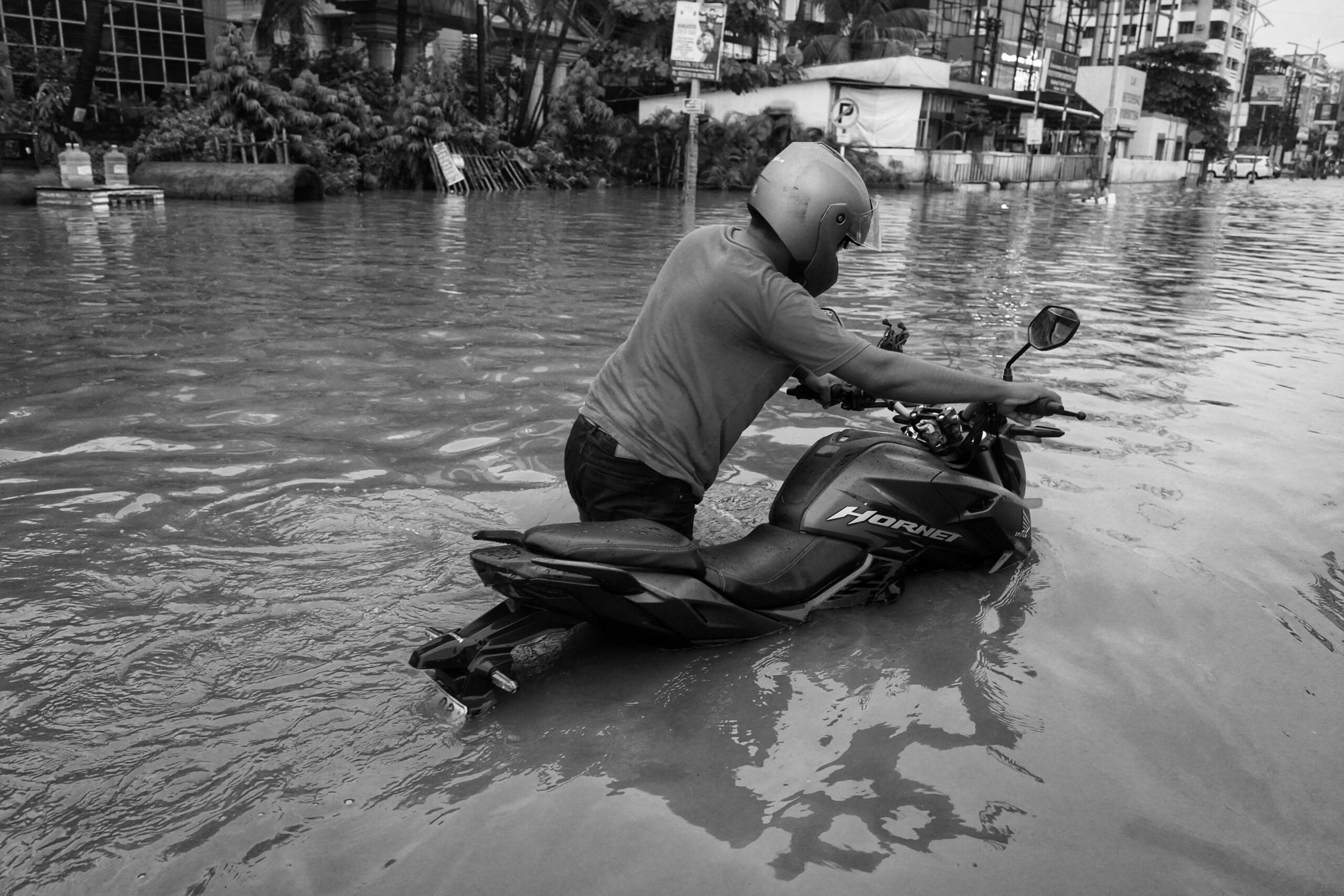
Several hundred people are missing after a massive flash flood caused by an avalanche of ice, rocks, and earth from a glacier in Nepal.
At least eight people have died in the floods, villages and roads have been severely damaged, and everything is covered by a thick layer of rocks and mud.
Officials reported that 384 tourists from India, the USA, the United Kingdom, and Malaysia are missing in the flood.
The Bhotekosi River overflowed today, flooding several villages and destroying hydroelectric facilities, authorities said, adding that they have called for rescue teams from China and India.
Climate experts from the International Centre for Integrated Mountain Development, based in Kathmandu, believe that the avalanche from the glacier likely caused the flash flood, as the weather in the Himalayas is getting increasingly warmer.
According to their statements, the Lhende Kola River, a tributary of the Bhotekosi, was the most affected.
“Lhende Kola has overflowed twice in 14 months. This time, the flood was caused by an avalanche of ice and rocks from the glacier on the Nepalese side, which blocked the river, and then that barrier broke, sending a huge wave of water and debris that swept away everything in its path,” said disaster risk reduction expert at this research organization, Saswata Sanjal.
The Himalayan region, which stretches across Nepal and several neighboring countries, including India, is particularly prone to heavy rainfall, floods, and landslides, as it is rapidly warming due to climate change.
Research has shown that extreme weather events, including heatwaves, heavy rainfall, and glacier melt, have become increasingly frequent in this region.
Researchers from the Kathmandu-based group determined earlier this year that glaciers across the Hindu Kush–Himalaya region are melting at an accelerating rate.
The rate of ice loss since 2000 has doubled, primarily due to rising temperatures as a consequence of climate change.





Your perspective is part of the story
Read other perspectives and join the conversation.