



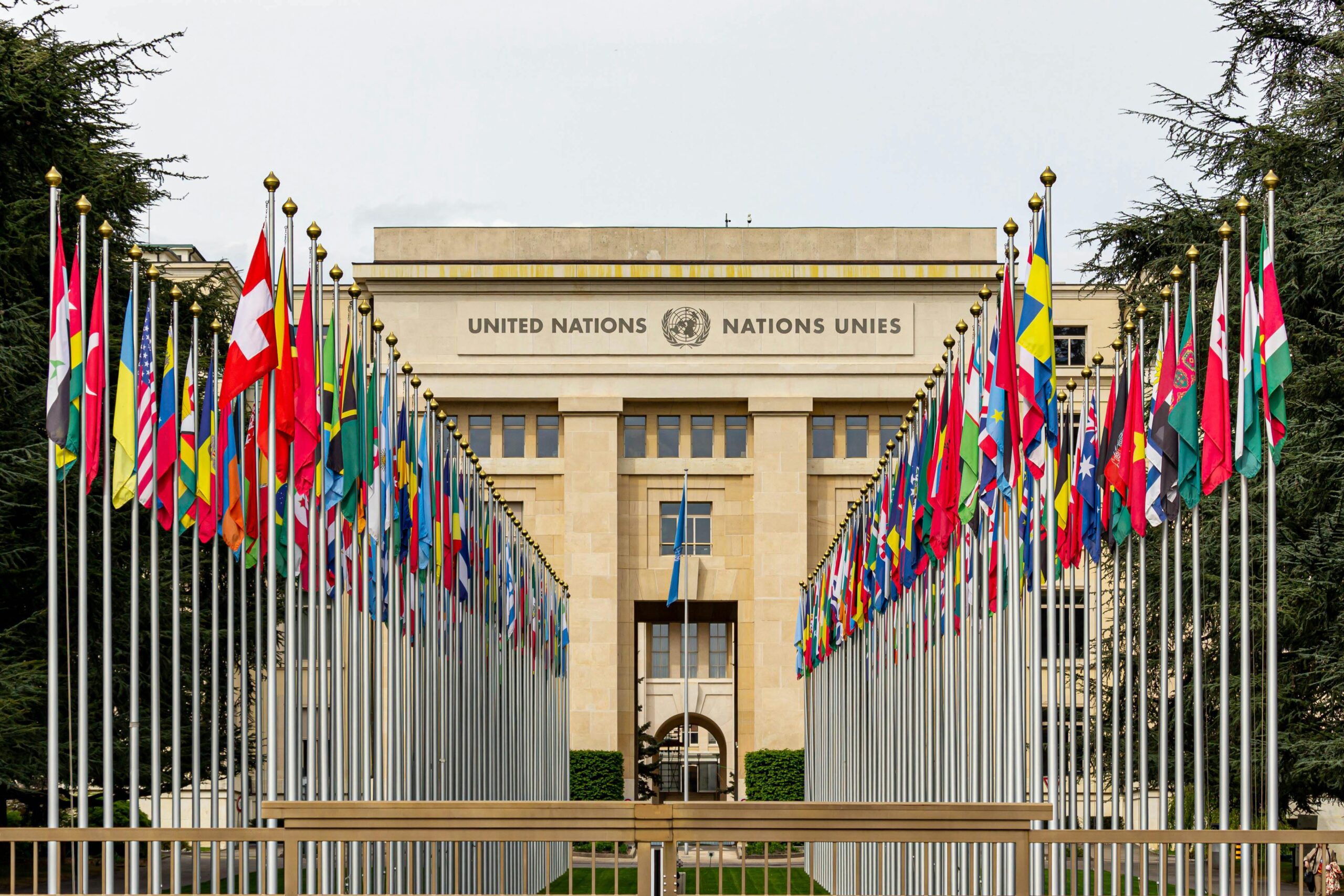
Representatives of the permanent members of the United Nations Security Council tonight at a session in New York presented differing views on the situation in Kosovo, relations between Belgrade and Pristina, and the future work of the UN Mission in Kosovo (UNMIK).
The session considered the report of UN Secretary-General Antonio Guterres on the work of UNMIK from March 16 to September 15. During the discussion, US Deputy Ambassador to the UN, Temi Bruce, stated that normalization of relations is the only way forward for Serbia and Kosovo.
“The US remains firmly committed to a peaceful, stable, and prosperous Western Balkans. The normalization of relations between Kosovo and Serbia is not only fundamentally important for their future, but is also the only sustainable way forward,” Bruce said.
She added that US President Donald Trump “cares about both countries” and wishes them peace and stability.
“With that goal, we call on both sides to show restraint, take practical steps to build trust, maintain stability, and approach the dialogue under the auspices of the European Union constructively. Lasting progress will come from Pristina and Belgrade, not from the United Nations.”
She said that the US has not changed its position that UNMIK should be terminated.
“We must stop pretending that Kosovo in 2026 is the same as Kosovo in 1999… UNMIK no longer plays any significant role in governance in Kosovo,” Bruce said.
She stated that NATO forces, the European Union, and the OSCE are present in Kosovo, as well as several other international agencies, and that they are in a better position to do the job than UNMIK.
“What remains is an oversized peacekeeping mission without peacekeepers. Maintaining a peacekeeping mission after its job is done helps no one,” Bruce added.
Deputy Head of China’s Mission to the UN, Fu Cong, said that Beijing supports Belgrade and Pristina in achieving a “mutually acceptable solution through sincere dialogue” within the framework of UN Resolution 1244.
He added that the situation in Kosovo remains fragile: “There have been frequent violent incidents and arrests of members of the Serbian community in significant numbers, private properties have been violently demolished, and legitimate rights and interests have been violated. This is deeply concerning.”
Cong assessed that Serbia has mostly remained calm and avoided escalation and called on the Pristina authorities to “stop escalatory moves that could worsen tensions” and to protect the safety and legitimate rights and interests of the Serbian community.
He stated that China welcomes the EU’s mediation in the Belgrade-Pristina dialogue, although it has not led to a high-level meeting and significant progress in the process, and called on both sides to bridge their differences.
He said that China calls on the Kosovo authorities to implement the 2013 Brussels Agreement without delay in order to “remove obstacles in the dialogue and negotiation process.”
“Kosovo authorities should pay attention to the basic needs of all communities in the fields of politics, economy, culture, and language, and take positive measures to enhance the sense of security and participation of all communities,” the Chinese diplomat stated.
He called on the UN Security Council to support the continued work of the UNMIK mission in maintaining stability in Kosovo, and assessed that the Kosovo authorities should ensure the mission’s unhindered operation.
Political Coordinator of the UK Mission to the UN, Jennifer McNaughtan, said that London continues to call on Serbia to bring to justice those responsible for the attack in the village of Banjska, in which Kosovo police officer Afrim Bunjaku was killed.
“This includes Milan Radoičić, who is on Interpol’s ‘red notice’, and is still at large in Serbia,” McNaughtan said.
She stated that the United Kingdom continues to call on Belgrade and Pristina to implement agreements and engage constructively in the EU-facilitated dialogue, which “includes full implementation of the Ohrid Agreement and fulfillment of obligations under Article 7, to ensure an appropriate level of self-government for the Serbian community in Kosovo.”
She said that the United Kingdom welcomes the reduction of UN staff and reiterates the call for a strategic review of the role of UNMIK, the mission’s duties, and its funding, so that UN resources are aligned with the situation on the ground.
Deputy Ambassador of France to the UN, Jay Darmadhikari, said that France calls on Belgrade and Pristina to renew momentum in the dialogue that was launched earlier this year with the agreement on the gradual implementation of the Law on Foreigners, reached on March 14.
“Ultimately, the goal is the full implementation of the Brussels and Ohrid agreements, which requires determined commitment from both sides,” Darmadhikari said.
He added that France welcomes the election of Kosovo President Justina Široka Pulje and that this should contribute to the proper functioning of Kosovo’s institutions and enable renewed progress and implementation of reforms.
He assessed that amendments to the law on special judicial chambers are not in line with Kosovo’s international obligations.
“France calls on Kosovo to fully respect its international obligations in order to guarantee the independence, impartiality, and judicial integrity of the special chambers,” Darmadhikari said.
He assessed that it is unacceptable that the perpetrators of the attack in Banjska are still at large, even though more than three years have passed since then, warning that “the perpetrators must be brought to justice and held accountable.”
He stated that the mandate of the UNMIK mission is “closely linked to the normalization of relations between Serbia and Kosovo” and that France gives the mission its full support.
Russia’s Ambassador to the UN, Vasily Nebenzya, assessed that the situation in Kosovo remains permanently tense and is “on the edge.”
“The self-proclaimed leadership of Kosovo is deliberately creating unbearable living conditions for Kosovo Serbs and driving them out of the province,” Nebenzya said.
He added that Serbian institutions are being shut down, the use of the dinar is banned, the electoral rights of Serbs are being violated, and the persecution of the Serbian Orthodox Church is increasing.
“The so-called judicial system of Kosovo Albanians fabricates large-scale criminal cases and conducts a campaign of intimidation,” Nebenzya said.
According to him, Serbian properties are being demolished bypassing established procedures, citing demolitions in the Gazivode Lake area as an example.
He assessed that Pristina undertook legal manipulations to change the mandate of the Specialized Chambers in The Hague after the verdicts against former officials of the “Kosovo Liberation Army.”
Nebenzya also said that the EU is ignoring Pristina’s refusal to establish the Community of Serb Municipalities.



Your perspective is part of the story
Start the discussion and be the first to comment on this story.