



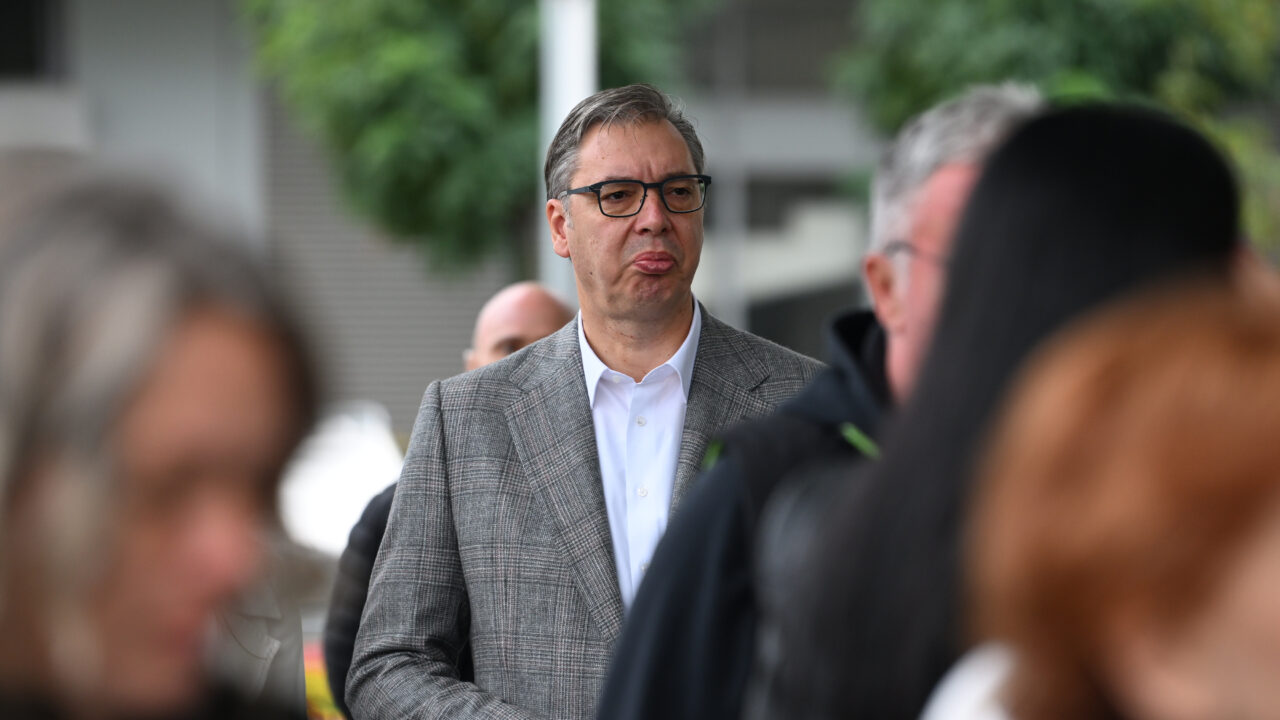
Parliamentary elections are being held in Serbia, seen as a showdown between the populist leader of this Balkan country, Aleksandar Vučić, and a movement of university students who have led protests against him for almost two years, writes the AP agency today in its report on the elections.
According to the agency, although 6.4 million voters in Serbia can choose between 18 parties competing to enter the 250-seat parliament, these elections have shaped up as a referendum between Vučić’s right-wing Serbian Progressive Party and the Student List led by young people.
It is believed that the main candidates, according to polls, are neck and neck, meaning that today’s elections are the most uncertain in recent years. A high turnout is expected, which could push smaller parties below the three percent threshold required to enter parliament.
Although Vučić has regularly outperformed the fragmented Serbian opposition in the past, the leaders of the student movement have proven to be strong opponents and have shaken his firm grip on power in Serbia like no one else in the past 14 years since his party took office.
A student victory would likely resonate beyond Serbia as countries across Europe face youth and student protests, writes AP.
The agency notes that recent elections have been marked by irregularities and that the European Union is closely monitoring the conduct of today’s vote in the candidate country for membership.
Both international and local election observers have already expressed concerns about the safety and fairness of the election campaign, which has been marked by detentions, almost complete government control of the media, and reports of surveillance and cyberattacks on activists, AP reports.
The agency recalls that in recent local elections in 10 municipalities in Serbia there were violent attacks on journalists and activists, and that after the previous parliamentary elections in 2023, opposition protests followed due to allegations of fraud.
If the SNS receives the most votes, Vučić will become prime minister after serving almost two full terms as president, AP notes, recalling that he resigned as president last month in order to lead the campaign.
The agency points out that Vučić’s popularity has eroded since 16 people died two years ago when a canopy collapsed at a railway station in the north of the country, which sparked a wave of youth protests demanding accountability for the tragedy and justice for the victims.
Their anger reflected widespread allegations of high-level corruption and clientelism, AP adds, noting that demonstrators said widespread corruption led to negligence during the reconstruction of the Novi Sad railway station and the collapse of the canopy.
As AP points out, despite the protests, Vučić has retained significant support among voters in Serbia, with his supporters seeing him as a capable leader who can guide the country through global uncertainties, an image carefully crafted in mainstream media.
On the other hand, AP says, the newly formed Student List movement differs from any political organization in Serbia, being shaped by university students, but none of them are actually on the list; instead, it features little-known experts, athletes, farmers, and artists.
Such an approach, AP says, is intended to counter Vučić’s one-man rule and restore a sense of community and solidarity, adding that the message “we know how” during the campaign promised a non-partisan effort to rebuild Serbia’s economy and democracy after a change of government.
The students, with their youthful energy, attracted voters disappointed with local politicians, and, vilified in pro-government media, they traveled by bicycle or walked across the country to reach voters in rural areas that are traditional Vučić strongholds, AP writes.
AP notes that election polls have produced varying results and both sides claim to be leading, while some analysts fear post-election instability if the result is close.
Vučić has said, according to AP, that his side will concede defeat if it loses the elections, but he also warned that any protests that might erupt with claims of fraud if his party wins would be immediately suppressed.
AP also reports the assessment of Eastern European analyst for the conflict-monitoring agency ACLED, Magda Anastasijević, who said that electoral violence has been on the rise in Serbia recently and could escalate “especially if the results are contested.”
It is also noted that the state election commission will not announce official results before Monday.



Your perspective is part of the story
Start the discussion and be the first to comment on this story.