



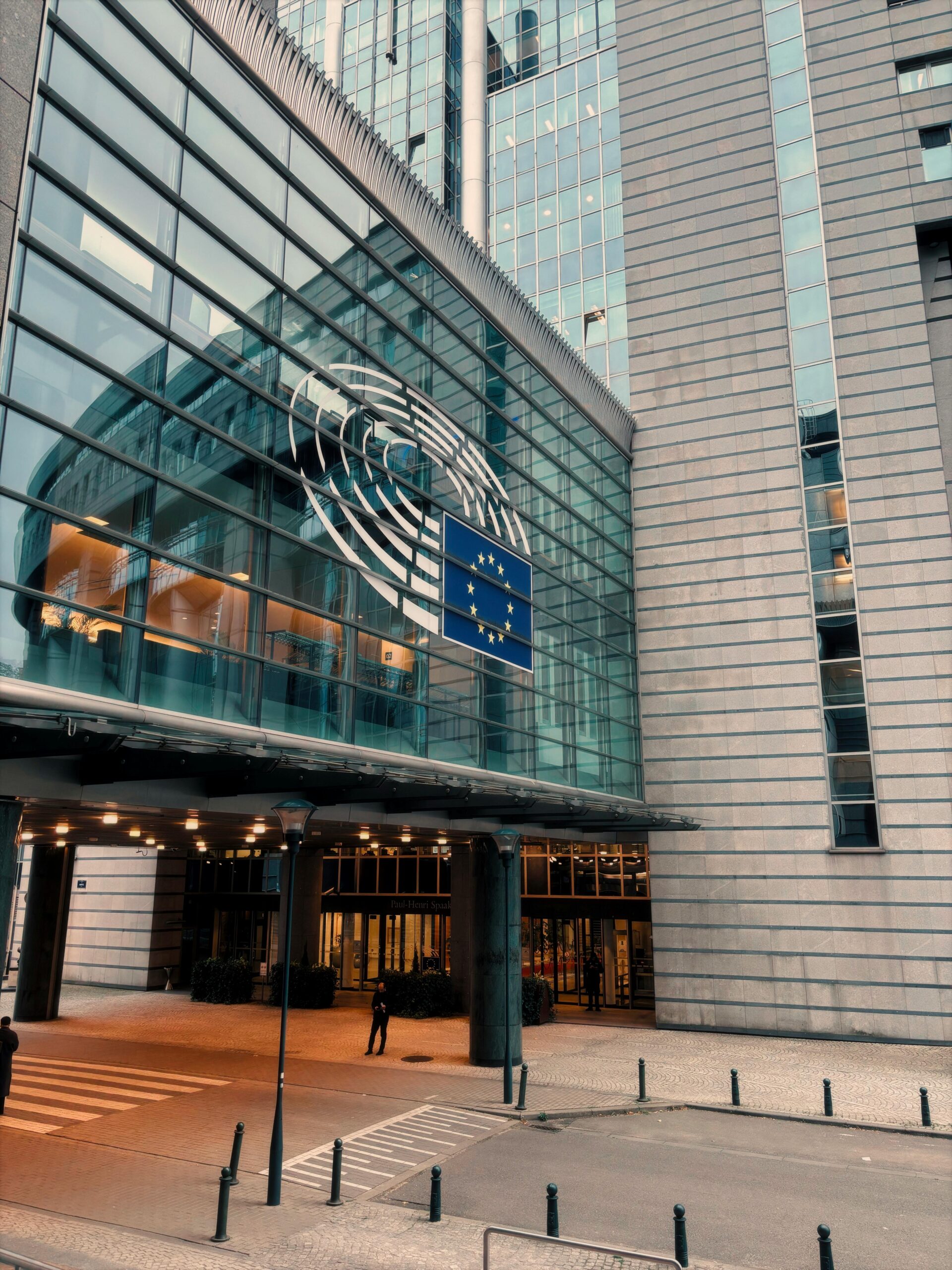
A large majority of Europeans want a strong, united, and independent Europe but question whether this can be achieved, according to a new study that suggests a crisis of trust across the continent is creating fertile ground for far-right narratives of decline.
The report, based on responses from 5,800 participants from France, Germany, Italy, the Netherlands, Poland, and the United Kingdom, and an analysis of how politics and media are discussed in 15 European countries, depicts an ambitious but disappointed European public, the British daily The Guardian reported today.
The research showed that 68 percent of respondents spoke about Europe in terms of “general deterioration or loss of normalcy,” while only 12 percent see the current moment as a time of “European awakening and renewal.”
As the leading challenges facing Europe, 43 percent of respondents cited war, 33 percent economic pressures, and 29 percent the need for greater autonomy. However, 74 percent said that Europe is not coping well with these challenges, and 56 percent believe its future is “in danger.”
The problem is not, as stated, a lack of ambition, as almost three-quarters of those surveyed have a strong European vision of unity and political integration, security, or prosperity, while only 13 percent speak of “less Europe” or the breakup of the EU.
European Council on Foreign Relations (ECFR) researcher Pawel Zerka believes the problem is not that people no longer want a stronger Europe, “but that they no longer believe it is achievable,” The Guardian reported.
Zerka said that people can imagine the Europe they want, but find it difficult to imagine the path “to the place where they want it to be.” “These are questions of policy, not just communication,” Zerka added.
A week before the State of the Union address by European Commission President Ursula von der Leyen, the EU, Zerka said, needs “fewer grand promises” and more “evidence of trajectory” for the Union.
In the study, European voters were classified into four categories – positive (19 percent), negative (39 percent), disconnected (12 percent), and uncertain (31 percent).
The positives see the current crisis as a catalyst for a stronger, more integrated EU, the negatives believe Europe’s best days are behind it, the disconnected are generally apathetic, and the uncertain share pro-European values but doubt the continent’s ability to act decisively.
Almost half of people in France, Germany, and Italy, as well as almost all far-right voters, such as those of Germany’s AfD, France’s National Rally, the Dutch PVV, and Britain’s Reform, are in the negative group, with 83 percent speaking of Europe in terms of loss and decline.
It is also stated that a third of respondents in all countries covered by the research mentioned “European slowness” in their answers, and almost a third pointed to the bloc’s inability to stand its ground when faced with powerful actors, with the recent customs concessions by the Union to Donald Trump being rated as particularly humiliating.
Zerka said that the group of uncertain respondents is key to Europe’s future trajectory and that leaders should address them instead of “preaching to the positives or bowing to the negatives.”
Unlike hard Eurosceptics, uncertain voters are strongly emotionally connected to the European project but are alienated by institutional inertia, bureaucracy, and perceived geopolitical weakness.
According to Zerka, winning back those who are skeptical would require politicians to show that joint European action can solve domestic crises, from energy security and defense to climate change and the cost-of-living crisis.



Your perspective is part of the story
Read other perspectives and join the conversation.